
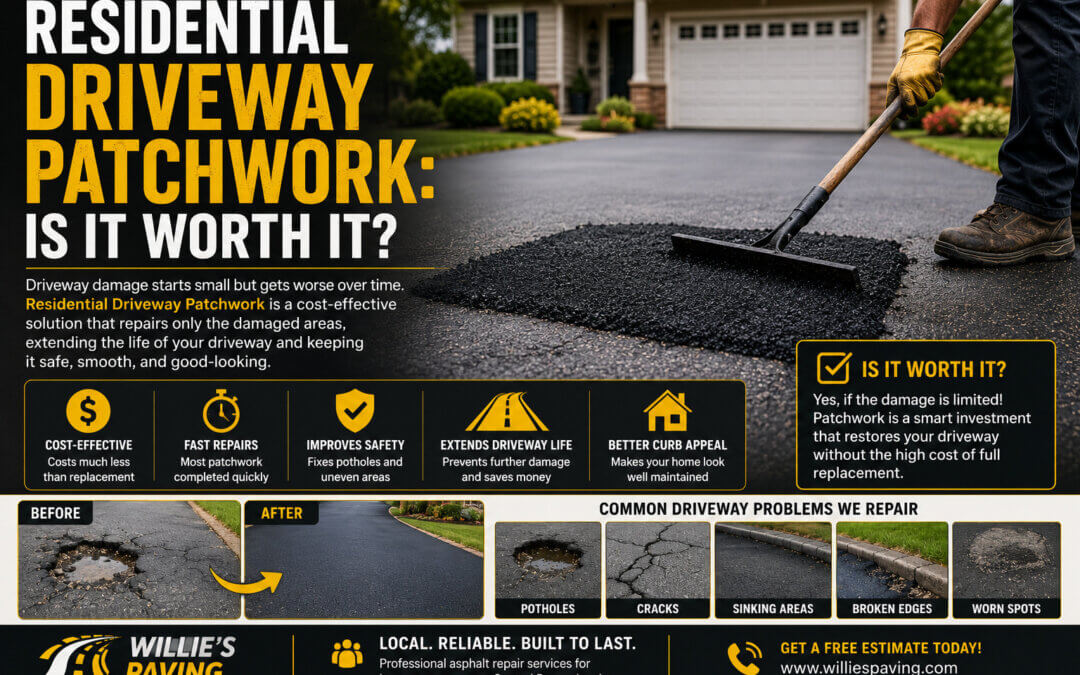
A damaged driveway never fixes itself. Small cracks grow wider. Potholes get deeper. Water seeps below the surface and weakens the base. Before long, a simple repair turns into a major expense.
That is why many homeowners look into Residential Driveway Patchwork before the damage spreads.
Patchwork repairs worn or broken areas without replacing the entire driveway. It costs less, takes less time, and helps extend pavement life. But many homeowners still ask the same question:
Is it actually worth it?
In most cases, the answer is yes.
At Willie’s Paving, we help homeowners across Central Pennsylvania repair damaged asphalt driveways with professional patchwork services. In this blog, we explain how driveway patchwork works, when it makes sense, and when replacement may be the better option.
What Is Residential Driveway Patchwork?
Residential driveway patchwork is the process of repairing damaged sections of asphalt instead of replacing the full driveway.
Contractors remove broken or weak pavement, repair the area underneath if needed, and install fresh asphalt. The goal is to restore strength, safety, and appearance while keeping costs manageable.
Patchwork is commonly used to repair:
- Potholes
- Cracks
- Surface sinking
- Broken driveway edges
- Oil-damaged areas
- Uneven pavement
- Worn spots from heavy traffic
This method works best when the overall driveway is still in decent condition.
Why Asphalt Driveways Get Damaged
Asphalt driveways handle constant wear from weather, water, and vehicle traffic. Even a well-installed driveway slowly breaks down over time.
Understanding what causes damage helps homeowners prevent larger problems later.
Water Damage
Water is the biggest cause of asphalt failure.
Rain enters small cracks and moves below the surface. Once water weakens the base layer, the asphalt starts to sink or break apart.
In winter, freezing temperatures make the damage worse. Water freezes, expands, and forces cracks to grow.
Eventually, potholes form.
Sun Exposure
Heat and sunlight dry out asphalt over time. The surface loses flexibility and becomes brittle.
This leads to cracking and surface wear.
Heavy Vehicles
Large trucks, trailers, and equipment place extra pressure on residential driveways.
Repeated heavy loads can create sinking areas and pavement stress.
Poor Drainage
Standing water shortens asphalt life quickly. If water collects on the driveway, the pavement weakens faster.
Aging Asphalt
Even with proper care, asphalt eventually wears down. Older driveways become more likely to crack, fade, and break apart.
Signs Your Driveway Needs Patchwork
Many homeowners wait too long before repairing asphalt damage. Small problems become larger and more expensive when ignored.
Here are the most common signs that patchwork may be needed.
Potholes are Appearing
Potholes are clear signs of pavement failure. They start small but grow fast once water enters the base layer.
Potholes can:
- Damage vehicles
- Create tripping hazards
- Collect water
- Spread across the driveway
Patchwork repairs the damaged area before the problem expands.
Cracks Are Growing
Tiny cracks often seem harmless. Over time, they widen and allow water below the surface.
Cracks that spread or connect together usually need professional attention.
The Surface is Sinking
Low spots or uneven areas often mean the base underneath has weakened.
Sinking pavement should be repaired quickly before it collapses further.
Edges are Breaking Apart
Driveway edges tend to weaken first, especially if vehicles drive too close to the sides.
Crumbling edges spread inward if not repaired.
Water Stays on the Driveway
Standing water points to drainage or surface issues.
A healthy driveway should drain water away instead of holding puddles.
Loose Gravel Appears
When asphalt starts breaking down, loose stones appear on the surface. This is called raveling.
Raveling means the pavement is deteriorating and losing strength.
How Residential Driveway Patchwork Works
Professional patchwork follows a step-by-step process to create long-lasting repairs.
Inspection
The contractor first checks the driveway to identify damaged areas and determine how deep the problem goes.
Cutting the Damaged Area
Broken asphalt is removed to create clean repair edges.
This step prevents weak material from remaining under the patch.
Cleaning the Area
Loose debris, dirt, and damaged material are cleared out completely.
Repairing the Base
If the foundation underneath is weak or wet, it must be repaired before new asphalt is installed.
This step is important for long-term durability.
Installing New Asphalt
Fresh hot asphalt is placed into the repaired section.
Compacting the Patch
Heavy compactors press the asphalt tightly into place to create a smooth, solid finish.
Final Inspection
The repair is checked for proper leveling, drainage, and compaction.
Benefits of Residential Driveway Patchwork
Patchwork offers several advantages for homeowners.
Lower Cost Than Full Replacement
Replacing a driveway costs far more than repairing a few damaged areas.
Patchwork allows homeowners to fix problems without paying for a complete tear-out.
Faster Repairs
Most driveway patchwork jobs are completed in a short amount of time.
Many repairs take only a few hours.
Longer Driveway Life
Fixing damage early helps extend the overall life of the driveway.
Patchwork prevents small issues from spreading across the surface.
Better Safety
Potholes and uneven pavement create risks for vehicles and pedestrians.
Repairs restore a smoother and safer surface.
Improved Curb Appeal
A clean driveway improves the appearance of the entire property.
Fresh patchwork helps driveways look maintained and cared for.
Prevents Bigger Repairs
Early repairs stop water damage from spreading deeper below the surface.
This reduces the chance of needing full replacement later.
Is Residential Driveway Patchwork Really Worth It?
For many homeowners, yes.
Patchwork is worth it when:
- Damage is limited to certain areas
- Most of the driveway is still solid
- Repairs are handled early
- The base underneath remains stable
Professional patchwork adds years to the life of a driveway at a much lower cost than replacement.
It also helps homeowners avoid larger repair bills down the road.
However, patchwork is not always the right solution.
When Patchwork May Not Be Enough
Some driveways are too damaged for repairs alone.
Full replacement may make more sense when:
- Cracks cover most of the surface
- Large sections are sinking
- Drainage problems affect the entire driveway
- The asphalt is very old
- Previous repairs continue failing
- The foundation underneath has widespread damage
In these situations, patchwork becomes temporary rather than long-lasting.
A professional inspection helps determine the best option.
How Long Does Driveway Patchwork Last?
The lifespan of patchwork depends on several factors:
- Quality of installation
- Weather conditions
- Drainage
- Traffic levels
- Maintenance
Properly installed full-depth patches can last many years.
Routine maintenance also helps extend repair life.
How to Make Asphalt Patchwork Last Longer
Patchwork performs best when paired with regular driveway maintenance.
Here are the best ways to protect repaired asphalt.
Schedule Sealcoating
Sealcoating helps protect asphalt from water, sunlight, and chemical spills.
It also improves appearance.
Repair Cracks Quickly
New cracks should be sealed before water enters the pavement base.
Keep Water Away
Good drainage prevents water damage and reduces erosion.
Avoid Heavy Loads
Large vehicles place extra stress on residential driveways.
Limiting heavy traffic helps preserve asphalt condition.
Clean the Surface Regularly
Leaves, debris, oil, and dirt can slowly damage asphalt surfaces.
Routine cleaning helps maintain pavement quality.
DIY Patchwork vs. Professional Repairs
Many homeowners consider fixing driveway damage themselves.
Store-bought patch kits may work for small temporary repairs, but they often fail quickly.
DIY repairs usually lack:
- Proper compaction
- Quality materials
- Base repair
- Long-term durability
Professional contractors use commercial equipment and proper repair methods to create stronger results.
Poor repairs often lead to more problems later.
The Best Time for Residential Driveway Patchwork
Spring, summer, and early fall are usually the best times for asphalt repairs in Pennsylvania.
Warm temperatures help asphalt compact properly and bond better.
Cold weather repairs are possible during emergencies, but permanent repairs perform best in milder conditions.
How Patchwork Helps Increase Property Value
Driveway condition affects curb appeal more than many homeowners realize.
A cracked or damaged driveway can make the entire property look neglected.
Clean, smooth pavement improves:
- Home appearance
- Buyer impressions
- Property value
- Safety
- Drainage
Patchwork is a cost-effective way to improve appearance without replacing the entire driveway.
Choosing the Right Asphalt Contractor
Not all patchwork repairs are equal.
Poor workmanship leads to weak patches that fail quickly.
When hiring a contractor, look for:
- Experience with asphalt repairs
- Good customer reviews
- Proper equipment
- Clear communication
- Honest recommendations
- Quality materials
A reliable contractor focuses on lasting repairs instead of quick temporary fixes.
Why Homeowners Choose Willie’s Paving
At Willie’s Paving, we provide professional residential driveway patchwork services throughout Central Pennsylvania.
We help homeowners repair:
- Potholes
- Cracks
- Sinking areas
- Edge damage
- Surface wear
- Uneven pavement
Our team focuses on quality workmanship, durable repairs, and honest service.
We repair asphalt damage before it becomes a larger and more expensive problem.
Final Thoughts
Residential Driveway Patchwork is often worth the investment when damage is caught early.
It repairs worn areas, improves safety, extends driveway life, and costs far less than full replacement. For many homeowners, patchwork is the smartest way to restore asphalt without overspending.
The key is acting before small damage spreads.
Potholes, cracks, and sinking pavement only get worse with time. Early repairs protect your driveway and help you avoid larger expenses later.
If your driveway shows signs of wear or damage, Willie’s Paving can help with professional asphalt patchwork services across Central PA.

