
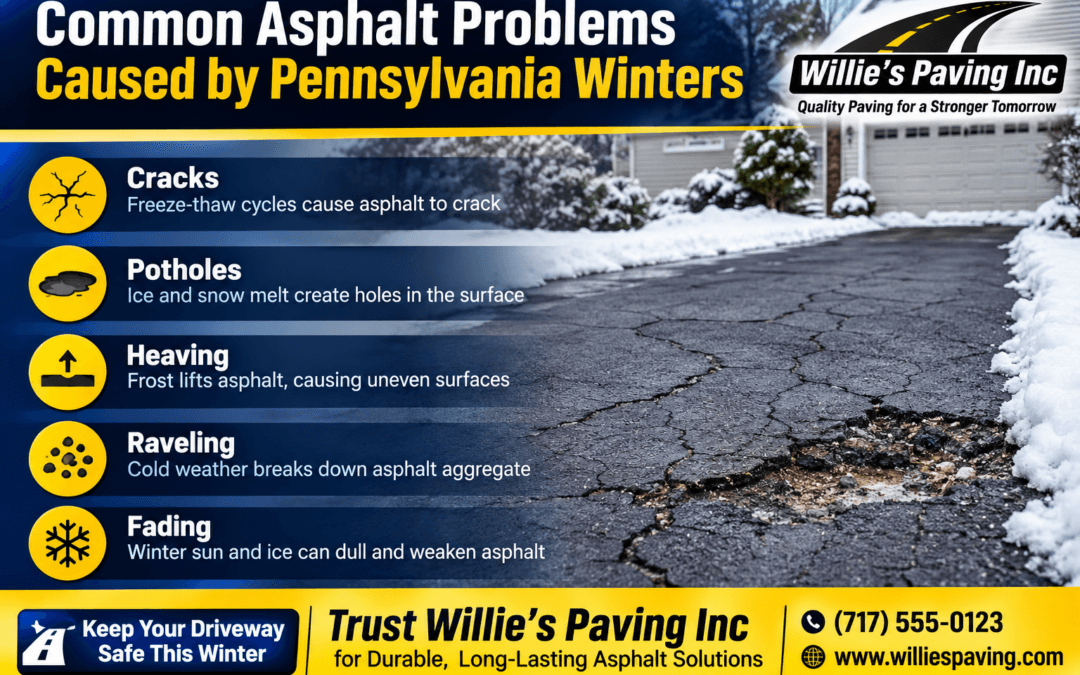
Pennsylvania winters can be tough on asphalt driveways, parking lots, and private roads. Snow, ice, freezing temperatures, and repeated freeze-thaw cycles all take a toll on pavement. Even a well-installed asphalt surface can develop damage over time if it isn’t properly maintained.
Understanding the most common winter-related asphalt problems can help property owners take action before minor issues turn into costly repairs. Regular inspections and timely maintenance can significantly extend the life of your pavement and keep it safe throughout the year.
In this guide, we’ll explore the most common asphalt problems caused by Pennsylvania winters, explain why they happen, and share practical tips to prevent expensive damage.
Why Pennsylvania Winters Are Hard on Asphalt
Pennsylvania experiences a mix of freezing temperatures, snowfall, rain, and frequent temperature changes during winter. These conditions create the perfect environment for asphalt deterioration.
One of the biggest challenges is the freeze-thaw cycle. Water enters small cracks in the pavement, freezes when temperatures drop, and expands. As the ice melts, the cracks grow larger, allowing even more water to seep inside. This process repeats throughout the winter and gradually weakens the asphalt and the foundation beneath it.
Without proper maintenance, these seasonal changes can shorten the lifespan of your driveway or parking lot.
- Cracks in Asphalt
Cracks are one of the first signs of winter damage.
Even tiny cracks allow water to penetrate beneath the surface. During freezing weather, that water expands, forcing the cracks to widen.
Common types of asphalt cracks include:
- Hairline cracks
- Longitudinal cracks
- Transverse cracks
- Edge cracks
- Block cracks
Ignoring small cracks often leads to much larger structural problems later.
How to Prevent Cracks
- Repair cracks as soon as they appear.
- Sealcoat your asphalt every two to three years.
- Keep water from pooling on the surface.
- Schedule annual pavement inspections.
- Potholes
Potholes are one of the most common winter pavement problems in Pennsylvania.
They form when moisture weakens the base beneath the asphalt. As vehicles drive over the weakened area, the pavement collapses, creating a hole.
Potholes can:
- Damage vehicle tires
- Harm suspension systems
- Create trip hazards
- Reduce curb appeal
The longer potholes remain unrepaired, the larger and more expensive they become.
How to Prevent Potholes
- Repair cracks before winter.
- Ensure proper drainage around the pavement.
- Address small surface damage immediately.
- Schedule professional asphalt patching when needed.
- Freeze-Thaw Damage
Freeze-thaw cycles are responsible for many asphalt failures.
Here’s how the process works:
- Water enters small cracks.
- Temperatures fall below freezing.
- Water freezes and expands.
- The pavement stretches and cracks.
- Ice melts and allows more water inside.
- The cycle repeats.
Each cycle weakens the pavement a little more until visible damage develops.
- Surface Oxidation
Winter weather isn’t the only concern.
After snow melts, asphalt is exposed to sunlight, moisture, and oxygen. These elements slowly dry out the asphalt binder, causing oxidation.
Signs of oxidation include:
- Gray pavement instead of black
- Rough texture
- Brittle surface
- Small surface cracks
Sealcoating helps protect asphalt from oxidation while restoring its rich black appearance.
- Water Damage
Water is one of asphalt’s biggest enemies.
When snow melts, large amounts of water flow across driveways and parking lots. If drainage is poor, standing water begins to weaken both the asphalt surface and the stone base underneath.
Over time, water damage causes:
- Cracks
- Potholes
- Surface sinking
- Base erosion
Good drainage is essential for extending pavement life.
- Edge Cracking
The edges of asphalt are more vulnerable because they have less structural support than the center.
Snowplows, vehicles driving off the edge, and water runoff can all contribute to edge cracking during winter.
If left untreated, these cracks gradually spread inward.
Protecting Asphalt Edges
- Avoid parking directly on driveway edges.
- Maintain proper drainage.
- Repair edge cracks early.
- Keep landscaping from washing onto the pavement.
- Frost Heaving
Frost heaving occurs when water beneath the pavement freezes and expands.
Instead of creating cracks immediately, the expanding ice pushes sections of asphalt upward.
When temperatures warm, the ground settles unevenly, leaving bumps, dips, and cracks behind.
This problem is especially common in areas with poor drainage or unstable soil.
- Damage from Snow Removal
Snow removal is necessary during Pennsylvania winters, but improper techniques can damage asphalt.
Potential issues include:
- Scraping the surface with metal plow blades
- Chipping asphalt edges
- Removing sealcoat protection
- Creating gouges in older pavement
Using properly adjusted snowplows and rubber blade protectors can reduce pavement damage.
- Damage from De-Icing Chemicals
Salt and chemical de-icers help improve winter driving conditions, but excessive use can contribute to pavement deterioration over time.
These products may:
- Increase moisture penetration
- Speed up surface wear
- Affect nearby landscaping
- Contribute to cracking when water repeatedly freezes
Use de-icing products responsibly and remove excess salt once winter weather has passed.
- Drainage Problems
Winter often exposes drainage issues that may not be noticeable during warmer months.
Poor drainage leads to:
- Standing water
- Ice patches
- Soft pavement base
- Faster asphalt deterioration
A professionally graded driveway allows water to flow away from the pavement instead of collecting on the surface.
How to Protect Your Asphalt During Pennsylvania Winters
Preventive maintenance is the best way to avoid expensive repairs.
Here are several ways to protect your pavement before winter arrives:
Schedule Sealcoating
Sealcoating creates a protective barrier against:
- Water
- Snow
- Ice
- UV rays
- Oil spills
Most asphalt surfaces benefit from sealcoating every two to three years.
Repair Cracks Before Winter
Small cracks become much larger after repeated freeze-thaw cycles.
Early crack filling prevents moisture from reaching the pavement base.
Keep Gutters and Drains Clear
Blocked drainage systems allow water to collect near the driveway.
Cleaning gutters and drains helps direct melting snow away from the asphalt.
Remove Snow Carefully
Avoid using sharp metal tools that may damage the pavement.
Instead:
- Use plastic shovels when possible.
- Raise snowplow blades slightly above the surface.
- Avoid scraping aggressively.
Schedule Annual Asphalt Inspections
Professional inspections identify small problems before they become major repairs.
A contractor can recommend crack sealing, patching, or sealcoating to extend pavement life.
When Should You Call an Asphalt Contractor?
You should contact a paving professional if you notice:
- Growing cracks
- Multiple potholes
- Standing water
- Uneven pavement
- Drainage issues
- Large areas of fading or crumbling asphalt
Prompt repairs often cost much less than replacing an entire driveway or parking lot.
Final Thoughts
Pennsylvania winters can be challenging for asphalt surfaces, but proper maintenance goes a long way in preventing serious damage. Understanding common issues like cracks, potholes, freeze-thaw damage, edge deterioration, and poor drainage allows homeowners and property managers to take proactive steps before problems become costly. Regular inspections, crack sealing, sealcoating, and proper drainage can significantly extend the life of your asphalt and keep it looking its best through every season.
If you need expert asphalt installation, repairs, sealcoating, or preventative maintenance, Willie’s Paving Inc is here to help. The experienced team at Willie’s Paving Inc provides dependable paving solutions designed to withstand Pennsylvania’s harsh winters while delivering long-lasting performance, safety, and curb appeal for your home or business.

