
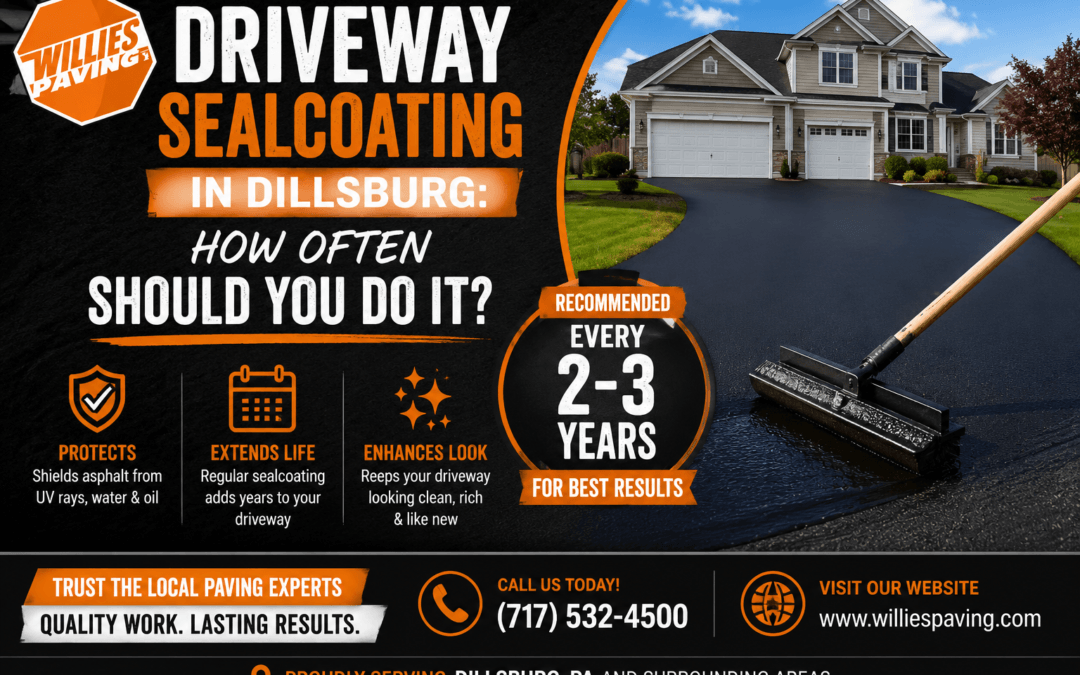
A well-maintained asphalt driveway does more than provide a smooth place to park your vehicle—it also enhances your home’s curb appeal and protects one of your property’s most valuable exterior investments. While asphalt is known for its durability, it isn’t maintenance-free. One of the most effective ways to extend the life of your driveway is through regular driveway sealcoating.
For homeowners in Dillsburg, PA, changing weather conditions, heavy rainfall, snow, ice, and intense summer sunlight can all wear down asphalt over time. Without proper protection, small cracks can develop into larger problems that require costly repairs.
If you’re wondering, “How often should you sealcoat your driveway in Dillsburg?”, this guide covers everything you need to know, including the benefits of sealcoating, the best schedule, warning signs your driveway needs attention, and tips for keeping your asphalt in excellent condition.
What Is Driveway Sealcoating?
Sealcoating is the process of applying a protective coating over an asphalt driveway. This protective layer acts as a shield against environmental damage and everyday wear.
A quality sealcoat helps protect your driveway from:
- Water penetration
- UV rays
- Snow and ice
- Oil and gasoline spills
- Oxidation
- Salt used during winter
- Everyday vehicle traffic
While sealcoating doesn’t repair structural damage, it plays an important role in preventing future deterioration and preserving the appearance of your asphalt.
Why Sealcoating Is Important in Dillsburg, PA
Dillsburg experiences a wide range of weather throughout the year. Cold winters, freezing temperatures, spring rain, and hot summers all affect asphalt surfaces.
One of the biggest challenges is the freeze-thaw cycle. Water enters small cracks, freezes when temperatures drop, expands, and causes those cracks to grow larger. Over time, this repeated process weakens both the asphalt surface and its foundation.
Sealcoating helps reduce water penetration, making it one of the best preventative maintenance services for homeowners in the Dillsburg area.
How Often Should You Sealcoat Your Driveway?
Most paving professionals recommend sealcoating an asphalt driveway every 2 to 3 years.
However, the exact schedule depends on several factors, including:
- Age of the driveway
- Weather exposure
- Vehicle traffic
- Quality of the original installation
- Previous maintenance
A driveway exposed to direct sunlight all day or frequent vehicle traffic may benefit from more frequent maintenance than one with lighter use.
When Should You Seal a New Asphalt Driveway?
Many homeowners believe a newly installed driveway should be sealed immediately.
In reality, fresh asphalt needs time to cure.
Most contractors recommend waiting 6 to 12 months after installation before applying the first sealcoat. This allows the asphalt to harden properly while still receiving protection before significant weather damage occurs.
After the first application, maintaining a regular sealcoating schedule every few years helps maximize the driveway’s lifespan.
Signs Your Driveway Needs Sealcoating
Not sure if it’s time to reseal your driveway? Watch for these common warning signs.
Fading Color
Fresh asphalt has a rich black appearance.
If your driveway has turned gray, oxidation is occurring, and the surface may no longer have adequate protection.
Small Surface Cracks
Hairline cracks often appear before major damage develops.
Sealcoating, combined with crack filling, helps prevent moisture from entering these openings.
Rough Surface Texture
As asphalt ages, the surface becomes rough and brittle.
This indicates that the protective oils in the asphalt are gradually breaking down.
Water Soaks Into the Surface
Healthy asphalt sheds water.
If rainwater quickly absorbs into the pavement instead of beading on the surface, your driveway may need a fresh sealcoat.
Previous Sealcoat Has Worn Away
If it’s been several years since your last sealcoating service, scheduling another application can help restore protection before more serious problems appear.
Benefits of Regular Driveway Sealcoating
Sealcoating offers several long-term advantages for homeowners.
Extends Driveway Lifespan
Routine sealcoating helps asphalt last significantly longer by protecting it from moisture, sunlight, and oxidation.
A well-maintained driveway can often last 20 to 30 years.
Prevents Costly Repairs
Repairing large cracks and potholes is much more expensive than preventing them.
Sealcoating reduces the likelihood of water damage that leads to major repairs.
Improves Curb Appeal
A freshly sealed driveway has a smooth, deep black finish that instantly improves the appearance of your home.
This is especially valuable if you’re preparing to sell your property.
Protects Against Oil and Gasoline
Vehicle fluids can weaken asphalt over time.
Sealcoating creates a barrier that makes spills easier to clean before permanent damage occurs.
Shields Against Pennsylvania Weather
Snow, rain, ice, UV rays, and road salt all contribute to pavement deterioration.
Sealcoating provides added protection against these seasonal challenges.
What Happens If You Skip Sealcoating?
Ignoring routine maintenance can shorten the life of your driveway.
Without sealcoating, asphalt becomes more vulnerable to:
- Cracking
- Potholes
- Water damage
- Surface fading
- Oxidation
- Base erosion
- Premature replacement
Regular maintenance is far less expensive than replacing an entire driveway.
Additional Tips to Protect Your Asphalt Driveway
Sealcoating works best when combined with good maintenance habits.
Repair Cracks Promptly
Even small cracks allow water beneath the pavement.
Repairing them early prevents larger structural problems.
Keep the Driveway Clean
Remove:
- Dirt
- Leaves
- Gravel
- Branches
Debris traps moisture against the asphalt and accelerates deterioration.
Clean Oil Spills Quickly
Motor oil softens asphalt over time.
Use a driveway-safe cleaner to remove spills as soon as possible.
Avoid Parking Heavy Equipment
Large trucks, trailers, and construction equipment place excessive pressure on asphalt.
Whenever possible, keep heavy vehicles off residential driveways.
Maintain Proper Drainage
Standing water weakens asphalt and the base beneath it.
Ensure gutters, downspouts, and landscaping direct water away from the driveway.
Why Professional Sealcoating Matters
While DIY sealcoating products are available, professional application often delivers better and longer-lasting results.
Experienced contractors:
- Thoroughly clean the surface
- Repair existing cracks
- Apply high-quality commercial-grade sealers
- Ensure even coverage
- Recommend the right maintenance schedule
Professional sealcoating provides a smoother finish and stronger protection against Pennsylvania’s changing weather.
Choosing the Right Time for Sealcoating
Weather conditions play an important role in successful sealcoating.
The best time is during:
- Late spring
- Summer
- Early fall
Ideal conditions include:
- Dry weather
- Temperatures above 50°F
- No rain expected for at least 24 hours
Scheduling maintenance during these seasons allows the sealcoat to cure properly.
Final Thoughts
Regular driveway sealcoating in Dillsburg is one of the smartest investments you can make to protect your asphalt and avoid expensive repairs. Most homeowners should plan to sealcoat their driveway every 2 to 3 years, while also addressing cracks, maintaining proper drainage, and keeping the surface clean. These simple maintenance steps help preserve your driveway’s appearance, improve durability, and extend its lifespan through Pennsylvania’s changing seasons.
If you’re looking for reliable asphalt maintenance or professional sealcoating services, Willie’s Paving Inc is your trusted local paving expert. From new driveway installations to crack repairs and preventative maintenance, Willie’s Paving Inc delivers high-quality workmanship and dependable service to help homeowners throughout Dillsburg protect their investment for years to come.

