
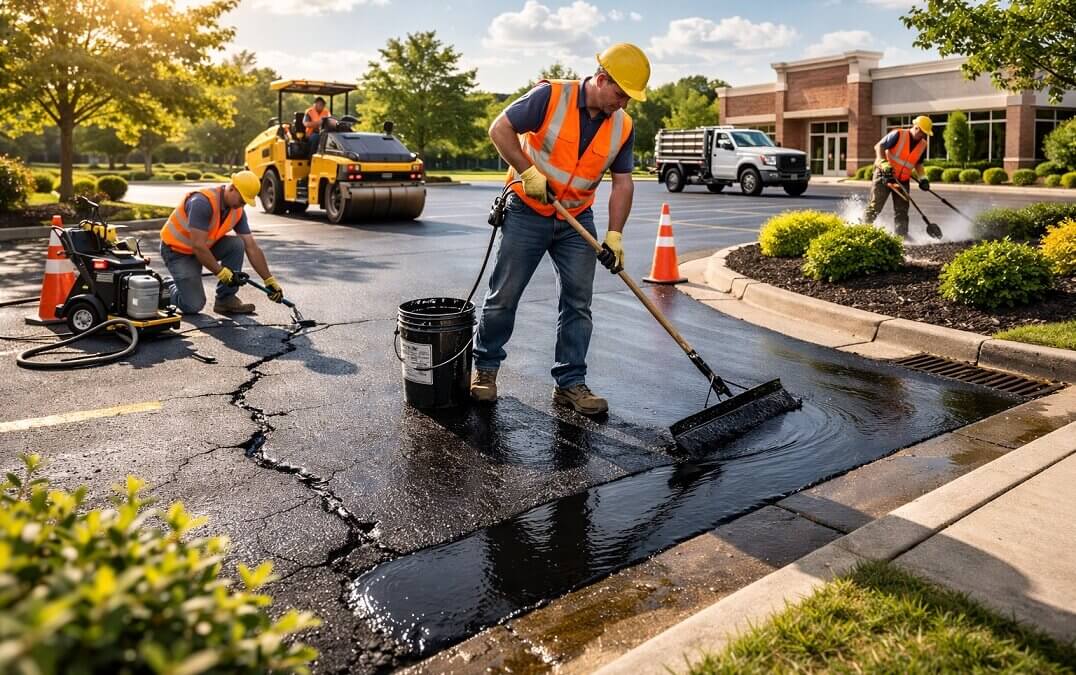
Asphalt looks strong and solid. It handles cars, trucks, weather, and daily use. But it does not stay in good shape on its own. Without care, it breaks down faster than most property owners expect.
Proper Asphalt Maintenance protects your pavement and your budget. Small repairs made at the right time prevent large, costly problems later. This blog explains how routine maintenance saves money over the long run and why it should never be ignored.
What Is Proper Asphalt Maintenance?
Proper Asphalt Maintenance means taking care of your pavement before major damage appears. It includes:
- Regular inspections
- Crack sealing
- Pothole repair
- Sealcoating
- Drainage checks
- Line striping for parking lots
These steps protect both the surface and the base underneath. When asphalt is maintained early, it lasts years longer.
Asphalt Deterioration: How Damage Starts
To understand savings, you must understand how damage happens.
Asphalt contains natural oils that keep it flexible. Over time, sun exposure dries those oils. The surface becomes brittle. Small cracks form. Water enters those cracks and weakens the base.
Once the base softens, pavement begins to sink and break apart. Potholes appear. Edges crumble. Repairs become larger and more expensive.
Damage never stays small. It spreads.
The Cost Difference: Maintenance vs. Replacement
Replacing asphalt is expensive. It involves removing old material, preparing the base, and installing new pavement. This process costs far more than preventive care.
Routine maintenance costs a fraction of replacement. Crack sealing and sealcoating are minor investments compared to full resurfacing or reconstruction.
When you practice Proper Asphalt Maintenance, you delay replacement by many years. That delay alone saves thousands of dollars.
Crack Sealing: Small Fix, Big Savings
Cracks are the first warning sign. They may look harmless, but they are entry points for water.
Crack sealing fills these gaps and blocks moisture from reaching the base. The cost is low compared to repairing water damage later.
If cracks are ignored:
- Water seeps in
- The base weakens
- Sections begin to fail
- Larger repairs become necessary
- Sealing cracks early prevents this chain reaction.
Sealcoating Protects the Surface
Sealcoating acts as a protective layer over asphalt. It shields against sunlight, water, oil, and chemicals.
Without sealcoating:
- The surface dries faster
- Oxidation increases
- Cracks form sooner
- Pavement fades and weakens
Sealcoating every few years keeps the surface flexible and strong. It slows aging and extends lifespan.
Over time, this reduces the need for costly overlays or full replacements.
Preventing Potholes Saves Major Repair Costs
Potholes form when water weakens the base and traffic breaks the surface apart.
Repairing a pothole costs more than sealing a crack. Repairing multiple potholes costs even more. If damage spreads across large sections, resurfacing becomes necessary.
Proper Asphalt Maintenance reduces the chance of potholes forming in the first place.
Drainage Control Protects Your Investment
Water is asphalt’s biggest enemy. Poor drainage speeds up failure.
Maintenance includes:
- Checking slope
- Clearing debris from drains
- Repairing low spots
- Preventing standing water
When water flows away properly, pavement lasts longer. Ignoring drainage leads to early deterioration and structural damage.
Extending Pavement Life by Years
Well-maintained asphalt can last 20 years or more. Poorly maintained pavement may fail in half that time.
The difference comes down to care.
Routine inspections catch issues early. Small repairs are quick and affordable. Each year of extended life increases return on your original paving investment.
That is the power of Proper Asphalt Maintenance.
Reduced Liability and Risk
Damaged pavement creates hazards. Cracks, potholes, and uneven surfaces increase the risk of slips, trips, and vehicle damage.
Accidents lead to:
- Injury claims
- Insurance increases
- Legal costs
- Lost business
Maintained pavement lowers these risks. Safe surfaces protect customers, employees, and drivers.
Preventing one injury claim can cover years of maintenance costs.
Improved Curb Appeal Attracts Business
Appearance matters. A faded, cracked parking lot makes a poor first impression.
Freshly maintained asphalt looks clean and professional. Clear striping improves traffic flow and parking organization.
Customers notice well-kept property. They also notice neglect.
Proper Asphalt Maintenance supports your image and protects revenue.
Lower Emergency Repair Costs
Emergency repairs cost more than planned maintenance. When pavement fails suddenly, work must be done quickly.
Urgent repairs often involve:
- Higher labor costs
- Temporary fixes
- Disruption to business operations
Routine care reduces emergency situations. Planned maintenance allows scheduling at convenient times and better pricing.
Protecting the Asphalt Base
The base layer beneath asphalt supports weight and traffic. If it fails, repairs become complex and costly.
Surface maintenance protects the base by keeping water out. Once the base is damaged, simple fixes are no longer possible.
Protecting the base protects your biggest investment.
Maintenance Planning Saves Budget Surprises
Unexpected replacement projects strain budgets. Planned maintenance spreads costs out over time.
Instead of one large expense, you manage smaller predictable ones.
Property managers and homeowners both benefit from steady, planned care.
Residential Driveways: Long-Term Savings
Homeowners often skip maintenance, thinking driveways are low priority. That decision shortens lifespan.
Proper Asphalt Maintenance for driveways includes:
- Annual inspections
- Crack repair
- Sealcoating every 2 to 3 years
- Keeping edges supported
Driveways maintained properly avoid early replacement. That saves thousands over time.
Commercial Parking Lots: Protecting Revenue
Parking lots see heavy traffic. Delivery trucks, employee vehicles, and customers use them daily.
Without maintenance:
- Surface damage increases quickly
- Traffic flow becomes unsafe
- Parking lines fade
- Liability risk grows
Commercial properties benefit greatly from consistent care. Maintenance costs are minor compared to lost revenue from closures or major repairs.
Weather Protection Matters
Sun, rain, snow, and freeze cycles attack asphalt year-round.
Hot weather softens surfaces. Cold weather causes cracking. Water expands when frozen and widens gaps.
Proper Asphalt Maintenance prepares pavement for these conditions. Sealed surfaces resist water penetration. Filled cracks prevent expansion damage.
Ignoring weather impact shortens lifespan dramatically.
Maintenance Timeline Example
Here is a simple long-term maintenance plan:
Year 1: Inspect and repair minor cracks
Year 2–3: Sealcoat
Year 4–5: Inspect and crack seal again
Year 6–7: Sealcoat
Year 8–10: Continue routine care
Following this schedule delays resurfacing far beyond what neglected pavement achieves.
Consistency creates savings.
Signs Maintenance Is Overdue
Watch for:
- Faded gray color
- Widening cracks
- Small potholes
- Standing water
- Loose edges
These signs indicate the surface needs attention. Acting quickly reduces repair size and cost.
The Financial Reality
Every year you delay maintenance increases future costs. Small surface issues turn into structural damage. Structural damage leads to reconstruction.
The price gap between maintenance and replacement is significant.
Investing in Proper Asphalt Maintenance protects your initial paving investment. It also lowers long-term ownership costs.
Final Thoughts on Proper Asphalt Maintenance
Asphalt does not fail overnight. It breaks down slowly when ignored.
Routine inspections, crack sealing, sealcoating, and drainage control keep pavement strong. These steps cost far less than major repairs or replacement.
Proper Asphalt Maintenance saves money by:
- Extending pavement life
- Preventing structural damage
- Reducing liability
- Avoiding emergency repairs
- Protecting curb appeal
The choice is simple. Maintain now and save later. Or delay and pay more.
Smart property owners choose maintenance.

