
Asphalt damage starts small. A crack appears near the edge of your driveway. A shallow pothole forms in a parking lot. Water begins to collect after rain. At first, these problems seem minor. Over time, they spread and become costly repairs.
That is where Asphalt Patchwork comes in.
At Willie’s Paving, we help property owners across Central Pennsylvania repair damaged pavement before it gets worse. Patchwork is one of the most effective ways to fix worn asphalt without replacing the entire surface.
In this blog, we explain what asphalt patchwork is, how it works, and when you should schedule repairs.
What Is Asphalt Patchwork?
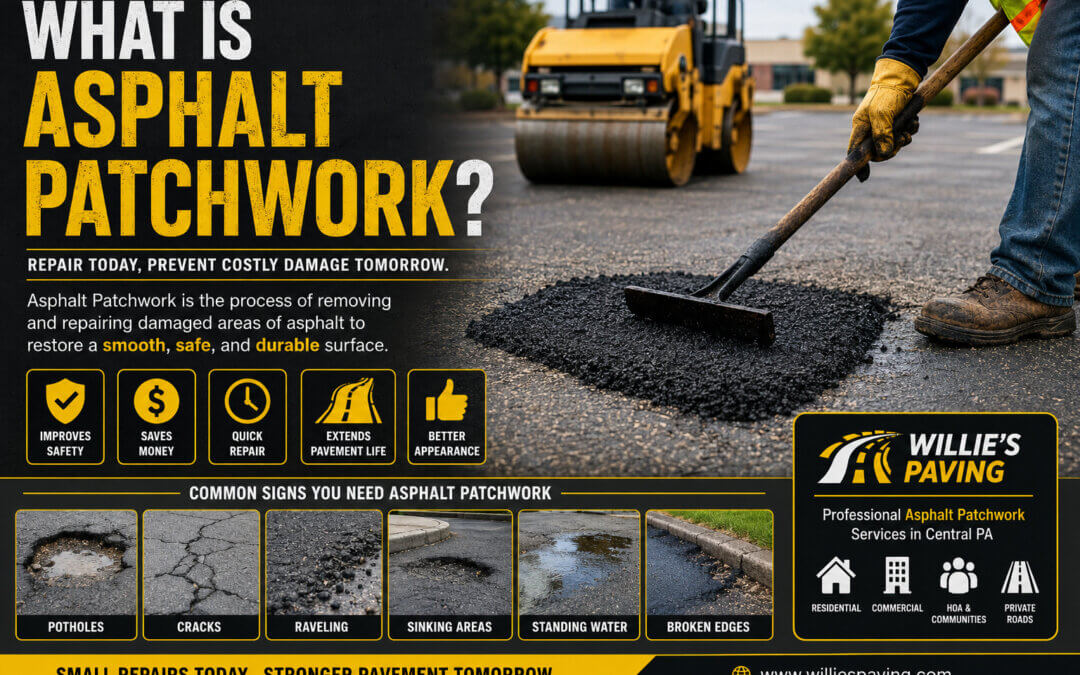
Asphalt patchwork is the process of removing and repairing damaged sections of asphalt. Instead of replacing the full driveway or parking lot, contractors focus only on the areas that need attention.
Patchwork repairs common pavement problems such as:
- Potholes
- Cracks
- Surface sinking
- Broken pavement edges
- Water damage
- Soft spots
- Uneven surfaces
The damaged area is cut out, cleaned, filled with new asphalt, and compacted. Once finished, the repaired section blends into the existing pavement and creates a safer, smoother surface.
Patchwork helps extend the life of asphalt while keeping repair costs lower than full replacement.
Why Asphalt Gets Damaged
Asphalt is strong, but it does not last forever. Weather, traffic, and moisture slowly wear it down.
Here are the most common causes of asphalt damage.
Water Penetration
Water is the biggest threat to asphalt. Rain and melting snow seep into small cracks. Once water reaches the base layer, it weakens the pavement from underneath.
During winter, freezing temperatures make the problem worse. Water expands when frozen and forces cracks to spread.
Over time, the surface breaks apart and potholes form.
Heavy Traffic
Parking lots and driveways handle constant pressure from vehicles. Heavy trucks, delivery vans, and equipment put extra stress on asphalt surfaces.
As traffic continues, weak areas begin to sink or crack.
Sun Exposure
Direct sunlight dries out asphalt over time. The surface becomes brittle and loses flexibility. This makes cracks appear faster.
Poor Drainage
Standing water shortens the life of pavement. If water cannot drain properly, it stays on the surface and slowly damages the asphalt.
Aging Pavement
Even well-installed asphalt wears down over the years. Sealcoating and maintenance help, but older pavement eventually needs repairs.
Common Types of Asphalt Patchwork
Not every repair requires the same method. Contractors choose different patching techniques based on the damage.
Surface Patching
Surface patching fixes minor damage near the top layer of asphalt. It works best for shallow potholes and small worn areas.
This repair is fast and cost-effective, but it is usually temporary if the base underneath is weak.
Full-Depth Patchwork
Full-depth patching removes damaged asphalt and unstable base material below it. New material is installed from the ground up.
This method lasts longer because it repairs the root of the problem.
Infrared Asphalt Repair
Infrared patching heats existing asphalt so it can blend with new material. The repair creates smoother transitions and reduces visible seams.
This method works well for certain cracks, potholes, and uneven areas.
Emergency Pothole Repairs
Temporary patching may be used during winter or emergencies when quick repairs are needed to keep surfaces safe.
These patches help prevent accidents until permanent repairs can be completed.
Signs You Need Asphalt Patchwork
Small pavement problems rarely stay small. Quick action helps avoid larger repair bills later.
Here are the clearest signs you need asphalt patchwork.
Potholes Are Forming
Potholes are one of the most obvious warning signs. They develop when water weakens the base under the asphalt.
Potholes create several problems:
- Vehicle damage
- Trip hazards
- Drainage issues
- Faster pavement breakdown
Patchwork repairs potholes before they spread across the surface.
Cracks Are Getting Larger
Tiny cracks may not seem serious at first. Once they widen, water enters below the surface and weakens the pavement structure.
Cracks that are growing, spreading, or connecting together usually need repairs soon.
Asphalt is Sinking
Low spots often mean the base underneath has failed. Sinking pavement can collect water and create uneven driving surfaces.
Patchwork removes unstable sections and restores proper support.
Loose Gravel Appears
When asphalt begins breaking apart, loose stones appear on the surface. This is called raveling.
Raveling means the pavement is deteriorating and losing strength.
Water Stays on the Surface
Standing water after rainfall points to drainage problems or surface failure.
Water should drain away quickly. If puddles remain, repairs may be needed.
Edges are Breaking Apart
Driveway and parking lot edges often weaken first. Crumbling edges spread inward if left untreated.
Patchwork repairs damaged edges before the problem grows.
Benefits of Asphalt Patchwork
Property owners often choose patchwork because it saves money and extends pavement life.
Here are the biggest benefits.
Lower Repair Costs
Patchwork targets only damaged sections instead of replacing the entire pavement.
This makes repairs far more affordable.
Faster Completion Time
Most patchwork jobs are completed quickly. Many repairs take only a few hours depending on the size of the damaged area.
That means less disruption for homeowners and businesses.
Longer Pavement Life
Repairing damage early helps prevent widespread deterioration.
Routine patchwork can add years to the life of your asphalt surface.
Improved Safety
Damaged asphalt creates hazards for drivers and pedestrians.
Patchwork removes potholes, uneven surfaces, and trip risks.
Better Appearance
Fresh patchwork improves curb appeal and makes properties look maintained.
This matters for homes, retail spaces, office buildings, and apartment complexes.
When Patchwork is Better Than Replacement
Some pavement damage looks severe but does not require full replacement.
Patchwork is usually the better choice when:
- Damage is limited to certain areas
- Most of the pavement is still in good condition
- The base remains stable
- Repairs are caught early
A professional inspection helps determine the best option.
When Full Replacement Makes More Sense
Patchwork cannot solve every asphalt problem.
Full replacement may be necessary when:
- Damage covers large sections
- The pavement is very old
- Drainage problems affect the entire surface
- Cracks appear everywhere
- The base has widespread failure
In these cases, patchwork becomes a short-term fix instead of a lasting solution.
How the Asphalt Patchwork Process Works
Professional patchwork follows several important steps.
Inspection
Contractors inspect the pavement to identify damaged areas and determine the cause of failure.
Cutting the Damaged Area
The damaged asphalt is cut out to create clean edges for the repair.
Removing Debris
Loose asphalt, dirt, and damaged material are removed from the repair area.
Repairing the Base
If the foundation underneath is weak, it must be repaired before new asphalt is installed.
Installing New Asphalt
Fresh asphalt is placed into the repaired section.
Compacting the Surface
Heavy rollers or compactors compress the asphalt to create a smooth, durable finish.
Final Inspection
The repaired area is checked for proper compaction, drainage, and appearance.
How Long Does Asphalt Patchwork Last?
The lifespan of asphalt patchwork depends on:
- Repair quality
- Weather conditions
- Traffic levels
- Drainage
- Maintenance
Well-done full-depth patchwork can last many years. Regular sealcoating and crack sealing help extend its life even further.
Poor repairs, on the other hand, fail quickly.
That is why professional installation matters.
Can You Patch Asphalt Yourself?
DIY patch kits are available at home improvement stores. Small temporary repairs may help in emergencies.
However, most long-term repairs require professional equipment and experience.
Improper patching often leads to:
- Weak compaction
- Uneven surfaces
- Poor drainage
- Fast failure
Professional contractors use commercial-grade materials and heavy equipment to create durable repairs.
The Best Time for Asphalt Patchwork
Spring, summer, and early fall are usually the best times for asphalt repairs in Pennsylvania.
Warmer temperatures help asphalt compact properly and bond better.
Winter repairs are still possible in emergencies, but permanent repairs perform best in mild weather.
How to Prevent Future Asphalt Damage
Patchwork fixes current damage, but maintenance helps prevent future problems.
Here are the best ways to protect asphalt surfaces:
Schedule Sealcoating
Sealcoating protects asphalt from water, sunlight, and chemicals.
Repair Cracks Early
Small cracks are easier and cheaper to fix than potholes.
Improve Drainage
Good drainage prevents water from weakening the pavement base.
Clean the Surface Regularly
Removing debris and oil helps preserve asphalt condition.
Schedule Regular Inspections
Professional inspections catch small problems before they grow.
Why Choose Willie’s Paving for Asphalt Patchwork?
At Willie’s Paving, we provide reliable asphalt patchwork services for residential and commercial properties across Central PA.
We repair:
- Driveways
- Parking lots
- Private roads
- HOA communities
- Commercial pavement
- Apartment complexes
Our team focuses on lasting repairs, proper preparation, and quality workmanship.
We help property owners fix pavement damage before it turns into a major expense.
Final Thoughts
Asphalt Patchwork is one of the smartest ways to repair damaged pavement without paying for full replacement.
It fixes potholes, cracks, sinking areas, and worn sections before the damage spreads. Fast repairs improve safety, appearance, and pavement life.
The key is acting early.
Small asphalt problems become expensive when ignored. Professional patchwork keeps surfaces strong and helps avoid larger repairs down the road.
If your driveway or parking lot shows signs of damage, Willie’s Paving can help restore it with professional asphalt repair services throughout Central Pennsylvania.

