
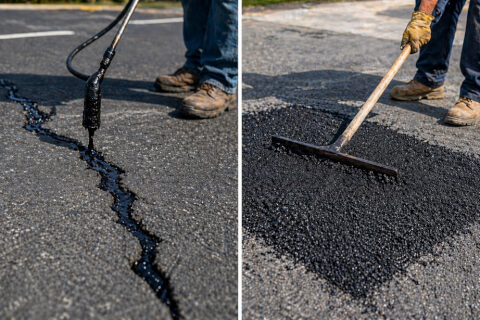
Asphalt does not stay perfect forever. Over time, cracks form. Small damage can turn into bigger problems if ignored. The key is knowing how to fix it the right way.
Many property owners hear two common terms: Crack Sealing vs. Patching. They sound similar, but they serve different purposes. Using the wrong method can waste money and shorten the life of your pavement.
This blog explains the difference, when to use each, and how both methods protect your asphalt.
Why Asphalt Repairs Matter
Asphalt faces constant stress from traffic, weather, and time. Sun dries it out. Water seeps in. Cold weather expands cracks.
Once damage starts, it spreads fast.
Ignoring small issues leads to:
- Potholes
- Base damage
- Costly repairs
Timely repair keeps your pavement strong and safe.
Understanding Crack Sealing vs. Patching
Crack sealing and patching are both repair methods, but they solve different problems.
- Crack sealing is for small surface cracks
- Patching is for deeper or larger damage
Choosing the right one depends on the condition of your asphalt.
What Is Crack Sealing?
Crack sealing is a preventive repair method. It fills small cracks in the surface to keep water out.
These cracks are usually:
- Narrow
- Not too deep
- Not causing structural damage
The goal is simple. Stop water from entering the base.
How Crack Sealing Works
The process involves a few steps:
- Cleaning the crack to remove dirt and debris
- Heating rubberized sealant material
- Filling the crack with the sealant
- Allowing it to cool and set
The sealant stays flexible. It expands and contracts with temperature changes.
This flexibility helps prevent cracks from reopening.
Benefits of Crack Sealing
Crack sealing offers several advantages:
- Stops water from damaging the base
- Slows crack growth
- Extends pavement life
- Costs less than major repairs
It is one of the most effective maintenance steps for asphalt.
When to Use Crack Sealing
Crack sealing works best when damage is still minor.
Use it when:
- Cracks are less than a quarter inch wide
- The surface is still strong
- There are no potholes
Early action is key. Waiting too long reduces its effectiveness.
What Is Patching?
Patching is a repair method used for larger or deeper damage.
It is needed when:
- Cracks have spread
- Potholes have formed
- The surface is breaking apart
Patching replaces damaged asphalt with new material.
Types of Asphalt Patching
There are different patching methods based on the damage.
Surface Patching
This covers small areas of damage on the surface.
Full-Depth Patching
This removes damaged asphalt and replaces it down to the base.
Full-depth patching is stronger and lasts longer for serious damage.
How Patching Works
The process depends on the type, but usually includes:
- Cutting out the damaged area
- Removing loose material
- Preparing the base
- Adding new asphalt
- Compacting the surface
This creates a solid repair that blends with the existing pavement.
Benefits of Patching
Patching provides:
- Strong repair for damaged areas
- Improved safety
- Better appearance
- Longer pavement life
It is the right choice when damage goes beyond surface cracks.
When to Use Patching
Use patching when:
- Cracks are wide and deep
- Potholes are present
- Asphalt is crumbling
- The base may be affected
Patching fixes structural problems that crack sealing cannot handle.
Key Differences: Crack Sealing vs. Patching
Understanding the difference helps you choose the right repair.
Purpose
- Crack Sealing: Prevents damage
- Patching: Repairs damage
Cost
- Crack Sealing: Lower cost
- Patching: Higher cost
Timing
- Crack Sealing: Early stage
- Patching: Later stage
Depth
- Crack Sealing: Surface level
- Patching: Deeper repair
Both methods are important. They work together to protect your pavement.
Why Using the Right Method Matters
Using patching when sealing is enough wastes money. Using sealing when patching is needed leads to failure.
Correct repair:
- Saves money
- Extends pavement life
- Reduces future problems
Knowing when to use each method is key.
The Role of Water in Asphalt Damage
Water is the main cause of asphalt failure.
When water enters cracks:
- It weakens the base
- Freezing expands the damage
- Traffic breaks the surface
Crack sealing blocks water early. Patching repairs areas where water has already caused damage.
Both methods help control water impact.
How Maintenance Extends Pavement Life
Regular maintenance keeps asphalt in good shape.
A strong plan includes:
- Crack sealing early
- Patching damaged areas
- Sealcoating every few years
This approach delays the need for full replacement.
Cost Comparison Over Time
Crack sealing costs less than patching. Patching costs less than replacement.
Here is how costs grow:
- Crack sealing
- Patching
- Resurfacing
- Full replacement
Fixing problems early saves money.
Signs You Need Crack Sealing
Look for:
- Thin cracks forming
- Dry, faded surface
- No potholes
These signs mean it is time to seal cracks before damage spreads.
Signs You Need Patching
Watch for:
- Potholes
- Large cracks
- Loose asphalt
- Uneven areas
These signs show that simple sealing is no longer enough.
Common Mistakes to Avoid
Many property owners make these mistakes:
- Ignoring small cracks
- Waiting too long for repairs
- Using the wrong repair method
- Skipping regular maintenance
Avoiding these mistakes protects your pavement.
Residential vs. Commercial Needs
Both homes and businesses need asphalt care, but usage differs.
Residential Driveways
- Lighter traffic
- Slower wear
- Less frequent repairs
Commercial Parking Lots
- Heavy traffic
- Faster wear
- More frequent maintenance
The same principles of Crack Sealing vs. Patching apply to both.
Why Professional Repairs Matter
DIY fixes may look quick, but they often fail.
Professional contractors:
- Use proper materials
- Follow correct methods
- Ensure long-lasting results
Quality repairs save money over time.
Why Choose Willie’s Paving
At Willie’s Paving, we understand the difference between crack sealing and patching.
We:
- Inspect pavement carefully
- Recommend the right solution
- Use quality materials
- Focus on long-term results
We do not guess. We fix the problem the right way.
Final Thoughts on Crack Sealing vs. Patching
Crack sealing and patching are both essential for asphalt care. Each has a clear role.
- Crack sealing prevents damage
- Patching repairs damage
Using the right method at the right time protects your pavement and your budget.
Regular maintenance keeps small problems from becoming big ones.
If you are unsure which service you need, a professional inspection can help. Acting early always saves money and extends the life of your asphalt.

