
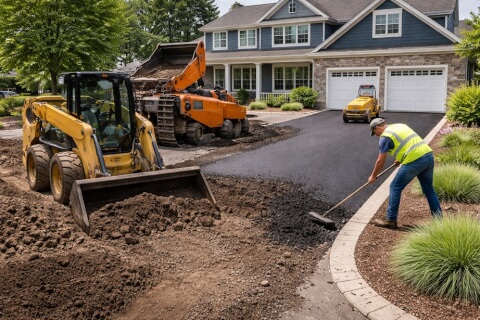
A new driveway looks simple when it’s done. The surface is smooth. The edges are clean. Cars move in and out with ease. What you don’t see is the work that happens before that final layer goes down.
The residential paving process involves several steps. Each one matters. Skipping or rushing any step leads to cracks, sinking, or early wear.
At Willie’s Paving, every project follows a clear plan. This blog explains each stage so homeowners know what to expect.
Why the Residential Paving Process Matters
A driveway is more than a surface. It is a structure. It needs a strong base, proper drainage, and the right materials.
A well-built driveway can last 15 to 20 years. A poorly built one may fail in just a few years.
The residential paving process ensures:
- A stable foundation
- Proper water flow
- Long-lasting surface strength
- Fewer repairs over time
Good results always start with proper preparation.
Step 1: Site Inspection and Planning
Every project begins with a site visit.
The contractor checks:
- Current driveway condition
- Soil type
- Drainage patterns
- Slope and layout
This step helps decide the best approach. Some driveways need full replacement. Others may only need resurfacing.
Measurements are taken to estimate materials and cost.
Clear planning prevents delays and mistakes later.
Step 2: Removing Old Pavement
If the existing driveway is damaged, it must be removed.
Crews use heavy equipment to break and remove the old surface.
This step clears the area for a fresh start.
In some cases, the base layer under the old driveway may still be usable. If not, it is removed as well.
A clean surface allows proper preparation for the new driveway.
Step 3: Grading and Preparing the Ground
Once the area is cleared, the ground must be shaped.
This step is called grading.
The goal is to create:
- A level surface
- A slight slope for drainage
- A stable base
Without proper grading, water may pool on the driveway or flow toward the home.
Contractors use equipment to level and shape the soil.
This step sets the foundation for everything that follows.
Step 4: Installing the Base Layer
The base layer supports the entire driveway.
Crushed stone or gravel is spread across the prepared ground. This layer is then compacted using heavy rollers.
A strong base:
- Prevents sinking
- Supports vehicle weight
- Improves drainage
Most base layers are several inches thick, depending on soil conditions.
The residential paving process depends heavily on this step. A weak base leads to early failure.
Step 5: Ensuring Proper Drainage
Water is the biggest threat to pavement.
Before laying asphalt, contractors make sure water will flow away from the driveway.
Drainage planning includes:
- Slope adjustments
- Edge grading
- Runoff paths
Good drainage protects both the surface and the base layer.
At Willie’s Paving, drainage is never an afterthought. It is built into the design from the start.
Step 6: Installing the Binder Layer (If Needed)
For thicker driveways or heavy use areas, a binder layer may be added.
This layer sits between the base and the top surface.
It contains larger stone mixed with asphalt. This adds strength and stability.
Not all residential driveways need this layer, but it is useful for areas with heavy traffic or weak soil.
Step 7: Laying the Asphalt Surface
Now the surface layer is installed.
Hot asphalt is delivered and spread evenly across the driveway.
Crews use paving machines to control thickness and smoothness.
Once the asphalt is in place, rollers compact it.
This step creates:
- A smooth finish
- Strong surface bonding
- Even thickness
Timing matters here. Asphalt must be compacted while it is still hot.
Step 8: Edge Support and Finishing
Edges are often the weakest part of a driveway.
Without support, they can crack or crumble.
Contractors strengthen edges by:
- Adding extra material along sides
- Compacting carefully
- Creating clean, defined borders
The crew also checks for smooth transitions to garages, sidewalks, and roads.
Final touches improve both function and appearance.
Step 9: Curing Time
Once paving is complete, the driveway needs time to cure.
Asphalt cools quickly, but it continues to harden over time.
Homeowners should:
- Avoid driving on it for at least 24 to 48 hours
- Keep heavy vehicles off for several days
- Avoid sharp turns that may mark the surface
Proper curing helps the driveway reach full strength.
Step 10: Final Inspection
A professional contractor reviews the finished work.
This includes checking:
- Surface smoothness
- Drainage flow
- Edge strength
- Overall appearance
Any small issues are corrected before the job is complete.
At Willie’s Paving, quality checks ensure the driveway meets high standards.
How Long the Residential Paving Process Takes
Most residential projects take one to three days.
The timeline depends on:
- Driveway size
- Weather conditions
- Site preparation needs
Larger or more complex projects may take longer.
Good planning keeps the project on schedule.
Common Mistakes in the Residential Paving Process
Some contractors rush or skip key steps.
This leads to problems later.
Common mistakes include:
- Poor base preparation
- Weak compaction
- Ignoring drainage
- Using low-quality materials
These shortcuts reduce the life of the driveway.
Choosing an experienced contractor helps avoid these issues.
Asphalt vs Concrete in the Paving Process
While asphalt is common, some homeowners choose concrete.
The process is similar in early stages, but the final steps differ.
Asphalt
- Faster installation
- Flexible surface
- Lower upfront cost
Concrete
- Longer curing time
- Rigid surface
- Higher upfront cost
Both options work well when installed correctly.
Maintenance After the Paving Process
A new driveway still needs care.
Simple maintenance keeps it in good condition.
Homeowners should:
- Sealcoat asphalt every few years
- Repair cracks early
- Keep the surface clean
- Avoid heavy loads in hot weather
Regular care extends the life of the driveway.
Signs of a Properly Completed Paving Job
A quality driveway shows clear signs.
Look for:
- Smooth, even surface
- Proper slope for water runoff
- Strong edges
- No soft spots or dips
These signs show the residential paving process was done correctly.
Why Hiring Professionals Matters
Paving is not a simple task.
It requires:
- Heavy equipment
- Skilled crews
- Knowledge of materials
- Proper timing
Professional contractors bring all of this together.
At Willie’s Paving, every step is handled with care. From prep to finish, the focus stays on quality and long-term performance.
Final Thoughts
The residential paving process involves more than laying asphalt. It is a step-by-step system that builds a strong, lasting surface.
Each stage plays a role. From site inspection to final compaction, every detail affects how the driveway performs over time.
Understanding this process helps homeowners make better decisions. It also helps them choose the right contractor.
A well-built driveway adds value, improves daily use, and lasts for years. With proper work from Willie’s Paving, homeowners can expect a smooth and durable result from start to finish.

