
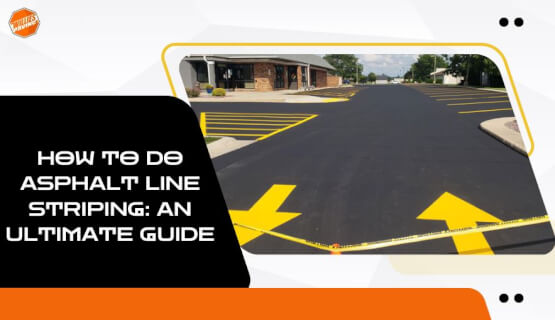
Asphalt line striping is important for pavement management, both functionally and aesthetically. Whether one is marking parking spaces, delineating traffic lanes, or creating safety zones, the right line striping is called for so that everything falls in place as it should and all drivers and pedestrians are safe.
In this comprehensive guide, we take you through the intricate process of how to do asphalt line striping. We cover it all, from initial planning down to the final application.
Preparation for Asphalt Line Striping
Preparation before the actual striping must be done properly in order to achieve longer-lasting results. The essential preparation for asphalt line striping includes:
1. Surface Preparation:
Check the asphalt surface and, if necessary, prepare it for application by filling in the cracks and holes. This will serve as a smooth canvas for the lines, avoiding inconsistent thickness and poor adhesion.
2. Cleaning:
Sweep off dirt, debris, and loose materials. In heavily soiled areas, power washing may be required.
3. Weather Conditions:
The best striping conditions are during dry weather with temperatures between 50°F to 90°F.
4. Traffic Control:
Provide a backup area for parking or divert traffic to accommodate drying time.
5. Equipment Preparation:
Ensure striping equipment is clean, maintained, and calibrated.
6. Layout Planning:
Measure and mark reference points to lay out lines, curves, and angles carefully.
7. Paint Selection
Select asphalt-specific paints that can handle the traffic and weather exposure that the asphalt will be subjected to.
8. Timing
Consider the right timing of the project; spring and fall are generally considered the best seasons.
9. Regulatory Compliance
Ensure all planned striping meets local regulations and ADA requirements.
10. Professional Expertise
If the project is too large or too complex, it is a good idea to call in experts like Willie’s Paving for professional results.
Application Techniques in How to Do Asphalt Line Striping
Once preparation is complete, now is the time to apply the striping. Here are some vital points to keep in mind when learning how to do asphalt line striping:
1. Use the Right Equipment:
Use professional-grade striping machines to achieve uniformity in application. For example, Willie’s Paving uses modern machinery for work with high accuracy.
2. Apply Even Pressure:
Keep the pressure uniform as you apply paint to get an even thickness of lines.
3. Follow Layout Markers:
Stick to the layout that you had preplanned so that the lines are straight and also well-aligned.
4. Allow the Right Drying Time:
When the drying time recommended by paint manufacturers is accomplished, allow traffic.
5. Use Multiple Coats:
For high-traffic areas, using multiple thinner coats might add to the longevity.
Asphalt Line Striping: Common Issues
Following are some of the common issues one may experience while learning how to do asphalt line striping:
1. Weather Interference:
Rain and temperature may hamper the activity of paint application and its drying.
2. Surface Unevenness:
The poor preparation of surfaces creates problems in the line quality.
3. Paint Bleed:
Overapplication of paint may result in bleeding on hot days.
4. Regulatory Compliance:
Ensuring that all striping is within the limits of local and ADA requirements is not an easy task to handle.
Maintenance and Longevity
Carry out the following maintenance activities in order to keep your asphalt line striping:
1. Regular Inspections:
Frequent checking of fading or wear, especially in high-traffic areas.
2. Prompt Touch-ups:
Any breakage in the patterns or fading should be attended to as soon as possible to ensure visibility and safety.
3. Restriping Schedule:
Therefore, consider plans for regular restriping every 6 months to every 3 years, depending on the condition of traffic and weather.
Professional Services of Asphalt Line Striping
While some would employ DIY striping on smaller projects, professional services are usually best to undertake the big or complex jobs.
Experience in how to undertake asphalt line striping ensures compliance with local authorities’ requirements and applies good quality, durable materials that can withstand traffic load conditions.
3. Application methods appropriate
4. Projects done well in less time
5. Long-lasting effects
Conclusion
Asphalt line striping is instructed on how to plan appropriately, perform accurately, and continually maintain. Good-quality line striping that enhances safety, and beauty, and keeps compliance with the laws and regulations can be achieved through following the highlighted steps in this guide and considering professional services where needed.
Keep in mind that good line striping is not just aesthetically pleasing; it is a crucial factor in traffic control and flow.
Whether you are a commercial, private business, or municipal entity with responsibility over a parking lot, roadway, or any paved area, the proper techniques of line striping-or hiring professionals like Willie’s Paving-can save you from headaches and costly future expenses.
Line Striping Paint Types
The paint you use decides how long the markings last.
| Type | How it works | Best for |
|---|---|---|
| Water based | Dries by evaporation, low odor, quick to re-open the lot | Most parking lots, the common choice |
| Solvent based | Bonds harder and holds up better in cold and damp conditions | Cooler weather and heavier traffic |
| Thermoplastic | Applied hot and bonds into the surface, far thicker than paint | High traffic areas and roadways |
Key Takeaways
- The surface has to be clean and fully dry before any paint goes down.
- New asphalt should cure before it is striped.
- Paint choice drives how long the lines last.
- Layout is planned before painting, because mistakes are hard to undo.
- Most lots need restriping every year or two depending on traffic.
Frequently Asked Questions
How long does asphalt line striping take to dry?
Water based striping paint is usually dry to the touch within about an hour and ready for traffic within a few hours, depending on temperature and humidity. Cooler or damp conditions slow it down.
How long should new asphalt cure before striping?
New asphalt needs to cure before it is striped, commonly around 30 days. Painting too early can trap oils in the surface and cause the lines to fail.
How often should a parking lot be restriped?
Most lots need restriping every one to two years. Heavy traffic, snow plowing and road salt all wear markings faster.
What weather do you need to stripe a lot?
A dry surface and dry forecast, with temperatures typically above 50 degrees. Rain or dew before the paint sets will ruin the lines.
Can you stripe over old faded lines?
Usually yes. If the existing layout is still correct, new paint goes right over the old lines. If the layout is changing, the old markings need to be removed or blacked out first.

