
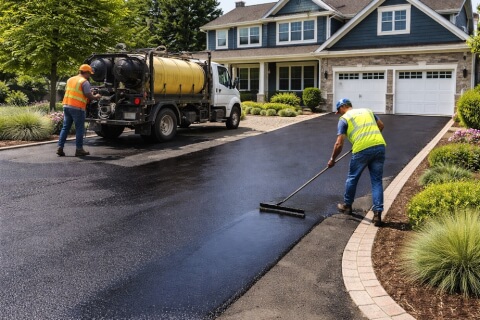
Your driveway faces constant pressure. Vehicles drive over it every day. Sunlight, rain, oil, and changing temperatures slowly break the surface down. Without protection, asphalt begins to dry out, crack, and lose strength.
That is why homeowners should sealcoat your residential driveway at the right time. Sealcoating adds a protective layer that shields the asphalt and helps it last longer.
This guide explains when sealcoating should happen, why timing matters, and how regular maintenance protects your driveway.
What Does It Mean to Sealcoat Your Residential Driveway?
Sealcoating is a protective treatment applied over asphalt pavement. It creates a thin layer that blocks moisture, sunlight, and chemicals from damaging the surface.
The sealcoat material spreads evenly across the driveway. Once it dries, it forms a dark, smooth layer that protects the asphalt below.
Sealcoating does several important things:
- Protects asphalt from water damage
- Slows cracking and surface wear
- Reduces fading from sunlight
- Improves the appearance of the driveway
Homeowners who sealcoat your residential driveway regularly often extend the pavement life by several years.
When Should You First Sealcoat a New Driveway?
A newly installed asphalt driveway needs time to cure before sealcoating. Fresh asphalt contains oils that must settle and harden.
Most paving professionals recommend waiting six to twelve months before the first sealcoat.
This waiting period allows the asphalt to:
- Fully cure
- Release excess oils
- Gain strength under normal use
Applying sealcoat too soon traps those oils and weakens the surface. Waiting the proper time ensures the protective layer bonds correctly.
Companies such as Willie’s Paving often inspect new driveways before recommending the first sealcoating service.
How Often Should You Sealcoat Your Residential Driveway?
Sealcoating is not a one-time job. Asphalt needs ongoing protection.
Most driveways benefit from sealcoating every two to three years.
This schedule works well because:
- The protective layer slowly wears away
- Weather exposure weakens the surface over time
- Traffic gradually removes the coating
Regular maintenance keeps the driveway protected without letting damage develop.
Skipping several years can lead to cracking, potholes, and costly repairs.
Signs It Is Time to Sealcoat Your Residential Driveway
Sometimes the driveway itself shows clear signs that it needs attention. Homeowners should watch for these changes.
The Asphalt Color Looks Gray
Fresh asphalt has a deep black color. As it ages, sunlight breaks down the surface oils. The pavement turns gray and dull.
This fading is one of the first signals that you should sealcoat your residential driveway.
A fresh sealcoat restores the dark appearance and protects the surface again.
Small Cracks Begin to Appear
Cracks often start small. They may look harmless at first.
These cracks allow water to enter the pavement. Once moisture reaches the base layer, damage spreads quickly.
Sealcoating combined with crack filling helps stop this process early.
Water Soaks Into the Pavement
Healthy asphalt repels water. When the surface becomes worn, water begins soaking into the pavement instead of running off.
This means the protective oils are fading.
At that point, homeowners should sealcoat before deeper damage develops.
Surface Feels Rough or Dry
Over time, asphalt loses flexibility. The surface may feel rough, brittle, or dry.
Sealcoating restores some flexibility and slows further wear.
Why Timing Matters for Sealcoating
Many homeowners delay maintenance because the driveway still looks usable. That delay often leads to expensive repairs.
Sealcoating works best as preventive care, not damage control.
Proper timing helps:
- Stop water from entering cracks
- Protect the asphalt from oxidation
- Reduce surface wear from traffic
Once large cracks or potholes form, sealcoating alone cannot solve the problem.
Repairs must happen first.
Best Time of Year to Sealcoat Your Residential Driveway
Weather conditions affect how sealcoat materials dry and bond.
Warm, dry weather works best.
The ideal conditions include:
- Temperatures above 50°F
- Dry pavement
- No rain expected for 24 to 48 hours
Late spring, summer, and early fall are the most common seasons for sealcoating.
Cold weather prevents the coating from curing properly.
Professional contractors schedule work carefully to avoid weather problems.
How Sealcoating Protects Asphalt
Many homeowners see sealcoating as a cosmetic upgrade. It does improve appearance, but the real value is protection.
Asphalt contains natural oils that keep it flexible. Sunlight slowly breaks down those oils.
Sealcoating helps protect the pavement by:
- Blocking ultraviolet rays
- Preventing water penetration
- Reducing damage from oil and fuel spills
Without sealcoating, asphalt becomes brittle and cracks more easily.
Regular maintenance keeps the surface strong.
Steps Involved in Sealcoating a Driveway
When professionals sealcoat your residential driveway, they follow a careful process.
Surface Cleaning
The driveway must be completely clean before sealcoating begins.
Crews remove:
- Dirt
- Leaves
- Oil stains
- Loose debris
A clean surface allows the sealcoat to bond properly.
Crack Repair
Cracks must be filled before the protective layer is applied.
This step prevents water from reaching the base layer.
Skipping crack repair reduces the effectiveness of sealcoating.
Applying the Sealcoat
The sealcoat mixture spreads evenly across the driveway using brushes, spray systems, or squeegees.
Contractors apply a thin, consistent layer across the entire surface.
Drying and Curing
After application, the driveway must dry before use.
Most sealcoating projects require 24 to 48 hours before vehicles return to the surface.
Weather conditions affect curing time.
How Long Sealcoating Lasts
Sealcoating durability depends on several factors.
These include:
- Traffic volume
- Weather exposure
- Quality of materials
- Proper application
Most sealcoating lasts two to three years under normal residential use.
Driveways with heavier traffic may need more frequent maintenance.
Benefits of Regular Sealcoating
Homeowners who sealcoat your residential driveway regularly gain several benefits.
Longer Driveway Life
Protection slows surface damage and helps asphalt last longer.
Many well-maintained driveways last 15 to 20 years or more.
Lower Repair Costs
Small maintenance steps cost far less than major repairs.
Sealcoating helps prevent:
- Large cracks
- Potholes
- Base failure
Preventive care saves money over time.
Better Curb Appeal
A freshly sealed driveway looks smooth, clean, and dark.
This simple upgrade improves the overall appearance of the home.
It can also increase property value.
Protection from Weather Damage
Rain, snow, and temperature changes stress asphalt surfaces.
Sealcoating helps block moisture and protect the pavement structure.
Common Mistakes Homeowners Make
Some homeowners unintentionally shorten the life of their driveway.
Common mistakes include:
- Waiting too long between sealcoating
- Ignoring small cracks
- Applying sealcoat during cold weather
- Using low-quality materials
Professional service helps avoid these issues.
Companies like Willie’s Paving follow proven methods that ensure proper application.
Why Professional Sealcoating Makes a Difference
While store-bought products exist, professional sealcoating produces better results.
Contractors have:
- Commercial-grade materials
- Proper equipment
- Experience with surface preparation
This combination leads to stronger protection and longer-lasting results.
Final Thoughts
Your driveway handles daily use and constant weather exposure. Without protection, asphalt slowly breaks down.
Knowing when to sealcoat your residential driveway helps prevent cracks, potholes, and costly repairs.
Most homeowners should plan the first sealcoat about a year after installation. After that, maintenance every two to three years keeps the pavement protected.
Regular sealcoating improves appearance, strengthens the surface, and extends driveway life. With proper care and professional service from companies like Willie’s Paving, your driveway can stay strong and attractive for many years.

