
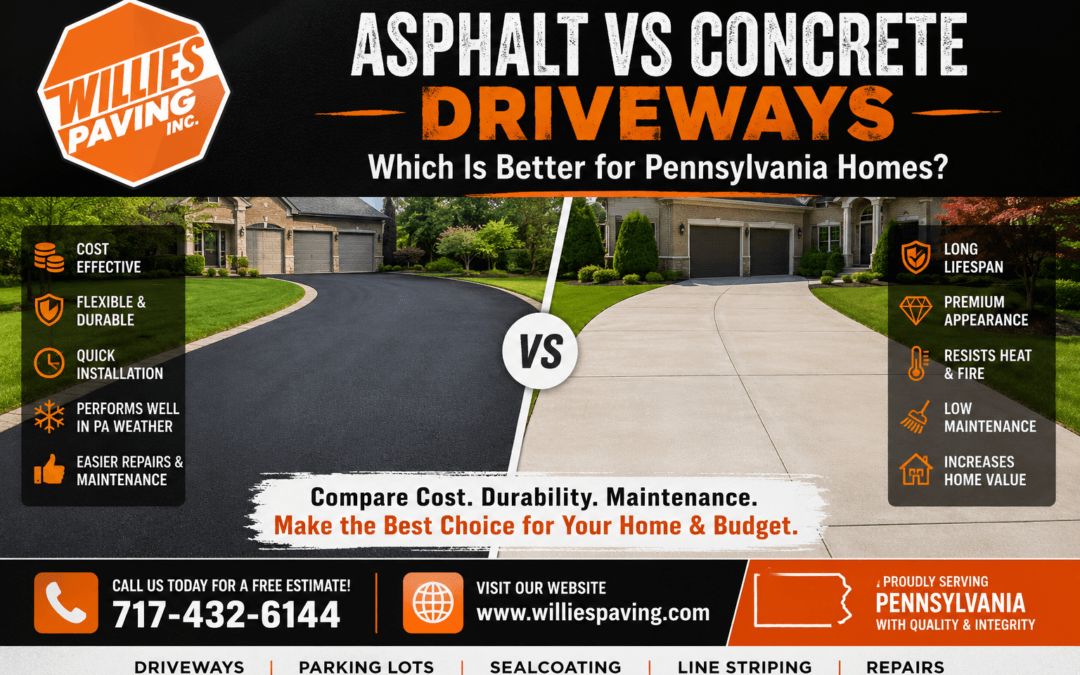
Choosing a new driveway is a major investment for any homeowner. Two of the most popular options are asphalt driveways and concrete driveways. While both provide a durable surface for parking and daily use, they differ in cost, appearance, maintenance, and performance.
If you live in Pennsylvania, where winters bring freezing temperatures and summers can be hot and humid, selecting the right driveway material is even more important. The weather can have a significant impact on how well your driveway performs over the years.
In this guide, we’ll compare asphalt vs. concrete driveways, explain the pros and cons of each, and help you determine which option is the best fit for your Pennsylvania home.
Asphalt vs. Concrete Driveways: Quick Comparison
| Feature | Asphalt Driveway | Concrete Driveway |
| Initial Cost | Lower | Higher |
| Lifespan | 20–30 Years | 30–40 Years |
| Maintenance | Moderate | Low to Moderate |
| Cold Weather Performance | Excellent | Good |
| Installation Time | 1–2 Days | 3–7 Days |
| Repair Costs | Lower | Higher |
| Snow Removal | Easier | Good |
| Appearance | Smooth Black Finish | Light Gray Finish |
Why Your Driveway Choice Matters in Pennsylvania
Pennsylvania experiences all four seasons, including:
- Heavy snowfall
- Ice and freezing temperatures
- Rain throughout the year
- Hot summer days
These changing weather conditions cause driveways to expand and contract. Choosing a material that can handle these temperature swings helps reduce cracking, repairs, and long-term costs.
What Is an Asphalt Driveway?
An asphalt driveway is made from crushed stone, sand, and liquid asphalt binder. It creates a smooth, flexible surface that performs well under changing weather conditions.
Many Pennsylvania homeowners choose asphalt because it is affordable, durable, and easier to maintain than many other paving materials.
Benefits of Asphalt Driveways
Lower Installation Cost
One of the biggest advantages of asphalt is affordability.
Compared to concrete, asphalt generally costs less to install, making it a popular choice for homeowners looking to improve their property without exceeding their budget.
Better Performance During Pennsylvania Winters
Pennsylvania winters can be tough on driveways.
Because asphalt is flexible, it expands and contracts more easily during freeze-thaw cycles. This flexibility helps reduce major cracking compared to rigid surfaces.
Faster Installation
Most asphalt driveways can be installed in just one or two days.
After installation, homeowners can usually begin using the driveway much sooner than with concrete.
This means less disruption to your daily routine.
Easier Repairs
Over time, every driveway experiences some wear.
The good news is that asphalt repairs are often simple and affordable.
Common maintenance includes:
- Crack filling
- Sealcoating
- Small patch repairs
These services help extend the life of the driveway without requiring full replacement.
Drawbacks of Asphalt Driveways
Although asphalt has many benefits, it also requires regular maintenance.
Homeowners should expect to:
- Sealcoat every 2–3 years
- Repair cracks promptly
- Clean oil spills quickly
Without maintenance, asphalt may fade, crack, or develop potholes over time.
What Is a Concrete Driveway?
Concrete driveways are made using cement, sand, gravel, and water.
Concrete creates a hard, durable surface with a clean appearance that many homeowners appreciate.
It is often chosen for modern homes because of its bright finish and decorative options.
Benefits of Concrete Driveways
Longer Lifespan
Concrete can last 30 to 40 years or even longer when properly installed and maintained.
Its long service life makes it attractive for homeowners planning to stay in their home for many years.
Attractive Appearance
Concrete offers more decorative possibilities than asphalt.
Homeowners can choose:
- Stamped concrete
- Colored concrete
- Decorative borders
- Exposed aggregate finishes
These options can improve curb appeal and complement the home’s exterior.
Less Frequent Maintenance
Concrete generally does not require sealcoating as often as asphalt.
Routine cleaning and occasional sealing are usually enough to keep it looking good.
Drawbacks of Concrete Driveways
Despite its durability, concrete has some disadvantages.
Higher Installation Cost
Concrete is typically more expensive than asphalt due to higher material and labor costs.
The larger the driveway, the greater the price difference.
More Vulnerable to Freeze-Thaw Damage
Concrete is rigid.
When water enters small cracks and freezes during winter, expansion can cause larger cracks or surface damage.
Pennsylvania’s changing weather increases this risk if the driveway is not properly maintained.
More Expensive Repairs
Concrete repairs often stand out because matching the original color and texture can be difficult.
Repairing damaged sections may also cost more than repairing asphalt.
Which Driveway Is Better for Pennsylvania Weather?
For many Pennsylvania homeowners, asphalt is often the better choice.
Here’s why:
- Handles freeze-thaw cycles better
- Less likely to crack during winter
- Faster snow melting because of its dark color
- Lower repair costs
- More affordable installation
Concrete still performs well but may require more expensive repairs if winter weather causes cracking.
Maintenance Comparison
Asphalt Maintenance
To maximize lifespan:
- Sealcoat every 2–3 years
- Repair cracks early
- Remove oil stains promptly
- Keep the surface clean
- Ensure proper drainage
Routine maintenance helps asphalt remain durable for decades.
Concrete Maintenance
Concrete maintenance typically includes:
- Cleaning stains
- Sealing every few years
- Repairing expansion joints
- Fixing cracks before moisture spreads
Although maintenance is less frequent, repairs may cost more when needed.
Which Driveway Adds More Curb Appeal?
Both materials can improve your home’s appearance.
Concrete offers more decorative finishes, making it popular for upscale homes.
Asphalt provides a clean, smooth black finish that complements nearly every home style while delivering a neat and professional appearance.
Freshly paved asphalt also creates excellent curb appeal.
Which Option Offers Better Value?
If your goal is balancing cost, durability, and performance, asphalt often provides better overall value.
It offers:
- Lower installation costs
- Easier maintenance
- Affordable repairs
- Excellent winter performance
- Long-lasting durability
For many Pennsylvania homeowners, these advantages make asphalt the more practical investment.
How to Choose the Right Driveway
Before making your decision, consider:
- Your budget
- Local climate
- Desired appearance
- Maintenance expectations
- How long you plan to stay in your home
A professional paving contractor can evaluate your property and recommend the best option based on your needs.
Final Thoughts
When comparing asphalt vs. concrete driveways, both materials offer long-term benefits. However, for Pennsylvania homeowners dealing with freezing winters, snow, and frequent temperature changes, asphalt often stands out as the more practical and cost-effective solution. Its flexibility, affordability, quicker installation, and easier maintenance make it an excellent choice for many residential properties.
If you’re planning to install a new driveway or replace an aging one, trust Willie’s Paving Inc for expert paving services and dependable craftsmanship. The experienced team at Willie’s Paving Inc is committed to delivering durable, high-quality asphalt driveways that enhance curb appeal and stand up to Pennsylvania’s challenging weather for years to come.

