
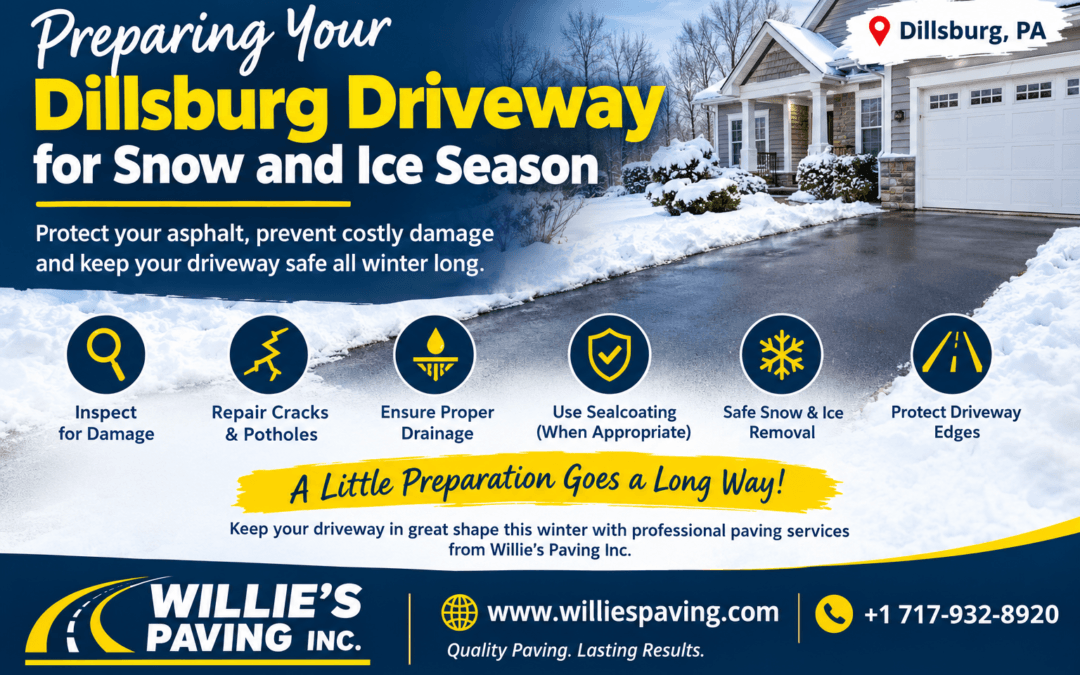
Winter in Dillsburg, Pennsylvania, can bring freezing temperatures, snow, ice, and repeated freeze-thaw cycles that put significant stress on residential driveways. A driveway that looks perfectly fine in the fall may develop cracks, potholes, surface deterioration, or drainage problems after months of winter weather.
Preparing your driveway before snow and ice arrive can help reduce seasonal damage and keep the surface safer and more functional throughout the winter. Proper maintenance also makes it easier to protect your investment and identify potential problems before they become larger and more expensive repairs.
Willie’s Paving Inc. provides professional paving and asphalt services for homeowners in Dillsburg and surrounding Pennsylvania communities. With proper preparation and timely maintenance, property owners can help their asphalt driveway handle the challenges of the winter season.
Why Winter Weather Can Damage Your Dillsburg Driveway
Asphalt driveways are designed to withstand regular vehicle traffic and changing outdoor conditions, but winter weather can be particularly demanding. Water can enter small cracks and openings in the asphalt. When temperatures fall below freezing, that water expands as it turns into ice.
Repeated freezing and thawing can gradually enlarge existing cracks and weaken the surrounding pavement. Over time, these small problems can contribute to potholes, crumbling edges, uneven surfaces, and other forms of asphalt deterioration.
Snow itself is not necessarily the biggest problem. The combination of moisture, freezing temperatures, ice, vehicle traffic, snow removal, and temperature changes can create conditions that accelerate pavement wear.
That is why preparing your driveway before winter is an important part of long-term asphalt maintenance.
- Inspect Your Driveway Before Winter
One of the first steps in preparing your driveway is conducting a careful inspection. Walk across the entire surface and look for visible signs of damage.
Pay particular attention to:
- Small or large cracks
- Potholes
- Crumbling asphalt
- Uneven areas
- Damaged driveway edges
- Standing water
- Drainage problems
- Areas where the surface appears worn or weakened
Small cracks may seem insignificant, but they can become more noticeable after repeated freeze-thaw cycles. Addressing these issues before winter weather arrives can help prevent additional deterioration.
If you notice several areas of concern, consider having your driveway evaluated by a professional paving contractor.
- Repair Cracks Before Snow and Ice Arrive
Crack repair is an important part of seasonal asphalt maintenance. Cracks provide pathways for water to penetrate beneath the pavement.
Once water enters a crack and freezes, the expansion can place pressure on the surrounding asphalt. Repeated cycles can cause cracks to widen and become more difficult to repair.
Before winter, homeowners should consider repairing suitable cracks and addressing areas where asphalt has started to break apart.
Professional asphalt contractors can evaluate the condition of the pavement and determine whether crack filling, patching, resurfacing, or another solution is appropriate.
- Address Potholes and Weak Areas
Potholes can become larger during winter if water continues entering damaged areas of the pavement. Snow and ice can also make existing potholes more difficult to see.
If your Dillsburg driveway already has potholes or areas of deteriorated asphalt, repairing them before winter can be a smart maintenance step.
A professional paving contractor can inspect the damaged area and determine the appropriate repair method. Depending on the condition and size of the damage, repairs may involve removing deteriorated material, preparing the base, and installing new asphalt.
Taking care of weak areas before winter may help prevent them from becoming larger problems.
- Check Driveway Drainage
Good drainage is essential for asphalt pavement, especially during Pennsylvania winters.
Water should be able to move away from your driveway instead of collecting on the surface or around the edges. Standing water can penetrate cracks and damaged areas, increasing the potential for freeze-thaw damage.
Before winter arrives, look at areas where water tends to collect after rain. If you consistently notice puddles or wet areas, there may be a drainage issue that should be evaluated.
Correcting drainage problems can help protect the asphalt surface and reduce unnecessary moisture exposure.
- Keep Leaves and Debris Off the Asphalt
Fall maintenance is another simple way to prepare your driveway for winter.
Leaves, branches, dirt, and other debris can collect on the asphalt surface. Organic material can hold moisture against the pavement and may contribute to surface staining and deterioration.
Keeping your driveway clean also makes it easier to identify cracks, potholes, and other areas requiring attention.
Sweep the surface regularly during the fall and remove accumulated debris before significant snowfall begins.
- Consider Sealcoating When Appropriate
Sealcoating can be part of a long-term asphalt maintenance program when the pavement is in suitable condition.
A quality sealcoat can provide an additional protective layer over an asphalt surface and help protect against moisture, weather exposure, and everyday wear. However, sealcoating should not be viewed as a solution for severely damaged pavement.
Cracks, potholes, and structural problems should generally be evaluated and addressed before applying a protective surface treatment.
Timing is also important. Asphalt maintenance products require appropriate temperatures and curing conditions, so homeowners should plan seasonal maintenance according to professional recommendations and local weather conditions.
- Be Careful With Snow Removal
Snow removal is necessary for many Dillsburg homeowners during winter, but improper techniques can damage asphalt.
When shoveling or plowing, avoid aggressively scraping the pavement. Metal blades and improper equipment settings can potentially damage the surface, especially where asphalt is already weakened.
If you use a snowplow, make sure the equipment is properly adjusted. Maintaining an appropriate blade position can help remove snow while reducing unnecessary contact with the pavement.
For smaller driveways, using a snow shovel designed for paved surfaces can be a practical option.
- Use Ice-Melting Products Carefully
Ice-melting products can help improve traction, but homeowners should use them carefully and according to the manufacturer’s instructions.
Avoid applying excessive amounts of deicing material. More product does not necessarily mean better results.
It is also important to understand that different deicing products have different properties. If you are unsure which product is appropriate for your driveway, follow the manufacturer’s recommendations and consider asking a paving professional for guidance.
After winter weather, removing leftover salt and debris can also help keep the driveway clean.
- Protect the Driveway Edges
Driveway edges can be particularly vulnerable to damage. Vehicles driving too close to the edge, water runoff, and repeated weather exposure can cause asphalt to crumble.
Try to avoid driving or parking with tires hanging over unsupported driveway edges. Keeping vehicles properly positioned can reduce unnecessary stress on the pavement.
You should also monitor areas where water flows alongside the driveway. Proper drainage around the edges can help reduce erosion and moisture-related problems.
- Avoid Heavy Loads on a Damaged Driveway
A driveway with existing cracks, potholes, or weakened areas may be more vulnerable to additional damage from heavy vehicles.
If possible, avoid placing unnecessary heavy loads on compromised areas of pavement during winter. Large vehicles, trailers, or equipment can place additional stress on already weakened asphalt.
If you notice significant structural damage, professional evaluation is often preferable to simply covering the problem temporarily.
Signs Your Driveway May Need Professional Attention
Some driveway problems require more than routine seasonal maintenance. Contacting a professional paving contractor may be appropriate if you notice:
- Large or spreading cracks
- Multiple potholes
- Significant surface deterioration
- Extensive crumbling
- Drainage problems
- Uneven or sinking areas
- Large sections of damaged asphalt
- Repeated repairs in the same location
The right solution depends on the condition of the pavement. Minor damage may be repairable, while extensively deteriorated asphalt may require resurfacing or replacement.
A professional assessment can help determine the most appropriate approach for your property.
Plan Your Driveway Maintenance Before Winter
Waiting until the first major snowstorm to think about driveway maintenance can make preparation more difficult. Fall is a useful time to inspect the pavement, clean the surface, address drainage concerns, and identify repairs that may need professional attention.
Planning ahead also gives homeowners time to address problems before freezing temperatures and snow make repairs more challenging.
For homeowners in Dillsburg, maintaining an asphalt driveway is not only about appearance. Proper maintenance can help protect the surface, improve usability, and extend the useful life of the pavement.
Trust Willie’s Paving Inc. for Your Dillsburg Paving Needs
Preparing your driveway for snow and ice season starts with understanding its current condition. Small cracks, drainage problems, potholes, and weakened asphalt should not be ignored, particularly before a Pennsylvania winter.
Willie’s Paving Inc. provides professional paving and asphalt services for residential and commercial properties in Dillsburg and surrounding areas. Whether your driveway needs maintenance, repairs, resurfacing, or a new asphalt installation, professional evaluation can help you determine the right solution for your property.
If you are preparing your Dillsburg driveway for the upcoming snow and ice season, take time to inspect the pavement now rather than waiting for winter damage to become more serious.

