
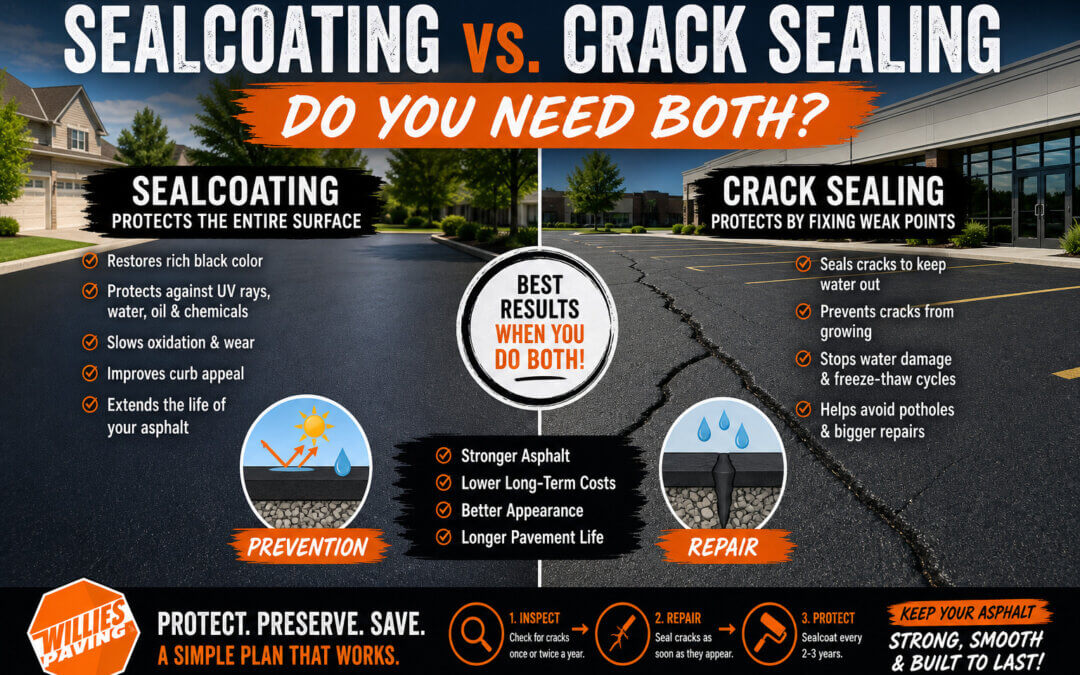
If you own a driveway or parking lot, you’ve likely heard about sealcoating and crack sealing. Many people think they’re the same thing. They’re not. Each serves a different purpose, and skipping one can lead to bigger problems.
This blog breaks down Sealcoating vs. Crack Sealing in plain terms. You’ll see what each does, when you need them, and why they often work best together.
What Is Crack Sealing?
Crack sealing is exactly what it sounds like. It targets cracks in asphalt and seals them to keep water out.
Cracks form over time. Sun, rain, traffic, and cold winters all play a part. In places with freeze-thaw cycles, like Pennsylvania, cracks get worse fast. Water seeps in, freezes, expands, and forces the crack wider.
Crack sealing stops that cycle.
How It Works
A crew cleans the crack, then fills it with a hot rubberized sealant. That material stays flexible. It moves with the pavement as temperatures change.
What It Fixes
- Linear cracks
- Early-stage damage
- Water entry points
What It Doesn’t Do
Crack sealing doesn’t improve the overall look much. It also won’t fix large areas of damage or potholes.
It’s a targeted repair, not a full surface treatment.
What Is Sealcoating?
Sealcoating is a protective layer applied over the entire asphalt surface.
It acts like a shield. It protects against sun, water, oil, and daily wear.
How It Works
A liquid sealcoat is spread or sprayed across the surface. Once it dries, it forms a smooth, dark layer.
What It Does
- Restores black color
- Slows down oxidation (drying out)
- Protects from water and chemicals
- Improves curb appeal
What It Doesn’t Do
Sealcoating doesn’t fill deep cracks or repair structural damage. If cracks are left untreated, they’ll show through the new coating.
Sealcoating vs. Crack Sealing: The Key Differences
Let’s keep it simple.
Crack sealing fixes specific problems.
Sealcoating protects the whole surface.
Crack sealing is repair. Sealcoating is prevention.
You need both if you want asphalt to last.
Why Crack Sealing Comes First
You always seal cracks before applying sealcoat. There’s no shortcut here.
If you sealcoat over open cracks, water still gets in. The surface may look better for a short time, but the damage continues underneath.
That leads to:
- Faster cracking
- Peeling or failure of the sealcoat
- More repair costs later
Crack sealing creates a stable base. Sealcoating then protects that base.
What Happens If You Skip Crack Sealing?
Skipping crack sealing causes problems, even if you apply sealcoat.
Cracks don’t stay small. They grow.
Water gets in. The base weakens. In winter, freezing water makes things worse.
You’ll start to see:
- Wider cracks
- Potholes
- Soft spots
Sealcoating alone can’t stop that.
What Happens If You Skip Sealcoating?
Now flip it.
If you only do crack sealing and skip sealcoating, the surface stays exposed.
Sunlight dries out the asphalt. It loses flexibility. The surface turns gray and brittle.
Oil and gas stains soak in. Water seeps through tiny pores.
Over time, new cracks form faster.
You fix one problem but leave the rest of the surface unprotected.
Do You Need Both?
Yes. If your goal is long-term performance, you need both.
They work together.
- Crack sealing handles the weak spots.
- Sealcoating protects everything else.
Using both gives you:
- Fewer repairs
- Longer pavement life
- Better appearance
Skipping one shortens the life of your asphalt.
When Should You Do Crack Sealing?
Timing matters.
Crack sealing should be done when cracks first appear. Don’t wait.
Ideal conditions:
- Dry weather
- Moderate temperatures
If you see cracks wider than a hairline, it’s time.
Annual inspections help. Catching cracks early keeps costs down.
When Should You Sealcoat?
Sealcoating isn’t needed every year, but it should be done on a schedule.
Typical timing:
- Every 2–3 years for most driveways
- More often for high-traffic parking lots
New asphalt should cure before sealing. That usually takes 6–12 months.
Weather matters here too. Warm, dry days give the best results.
The Best Maintenance Plan
A simple plan works best.
- Inspect the surface once or twice a year
- Seal cracks as soon as they appear
- Sealcoat every few years
This routine keeps small issues from turning into big ones.
Cost Comparison: Repair vs. Prevention
Many property owners try to save money by skipping steps. That backfires.
Crack sealing is affordable. Sealcoating is also cost-effective.
But repairs from neglect? Those get expensive fast.
Think about:
- Pothole repairs
- Base reconstruction
- Full resurfacing
Preventive work costs less than major repairs. Every time.
Residential vs. Commercial Needs
Both homeowners and business owners need these services, but the approach can differ.
Residential Driveways
- Less traffic
- Slower wear
- Sealcoating every few years works well
Commercial Parking Lots
- Heavy traffic
- Faster wear
- More frequent crack sealing and sealcoating
Businesses also need clear striping and a clean look. First impressions matter.
Common Mistakes to Avoid
People often make the same mistakes.
Waiting Too Long
Small cracks turn into large ones. Early action matters.
Skipping Prep Work
Sealcoating over dirty or damaged surfaces doesn’t last.
DIY Without Proper Tools
Store-bought products don’t match professional materials. Results are often uneven.
Ignoring Weather Conditions
Cold or wet weather leads to poor results.
Signs You Need Crack Sealing and Sealcoating
Watch for these signs.
You Need Crack Sealing If:
- You see visible cracks
- Cracks are growing
- Water sits in them after rain
You Need Sealcoating If:
- Asphalt looks gray or faded
- Surface feels rough
- Stains are visible
- It’s been a few years since the last coat
If you notice both, it’s time for a full maintenance job.
How Long Do Results Last?
- Crack sealing can last several years, depending on conditions
- Sealcoating typically lasts 2–3 years
Traffic, weather, and maintenance habits all play a role.
Regular upkeep extends those timelines.
The Bottom Line
Sealcoating vs. Crack Sealing isn’t an either-or choice.
They serve different roles.
- Crack sealing stops damage from spreading
- Sealcoating protects the surface from future wear
Using both is the smart move. It keeps your asphalt strong, safe, and looking good.
If you want to avoid costly repairs and extend the life of your pavement, don’t skip either step.

